Choose what you want viewers to notice first
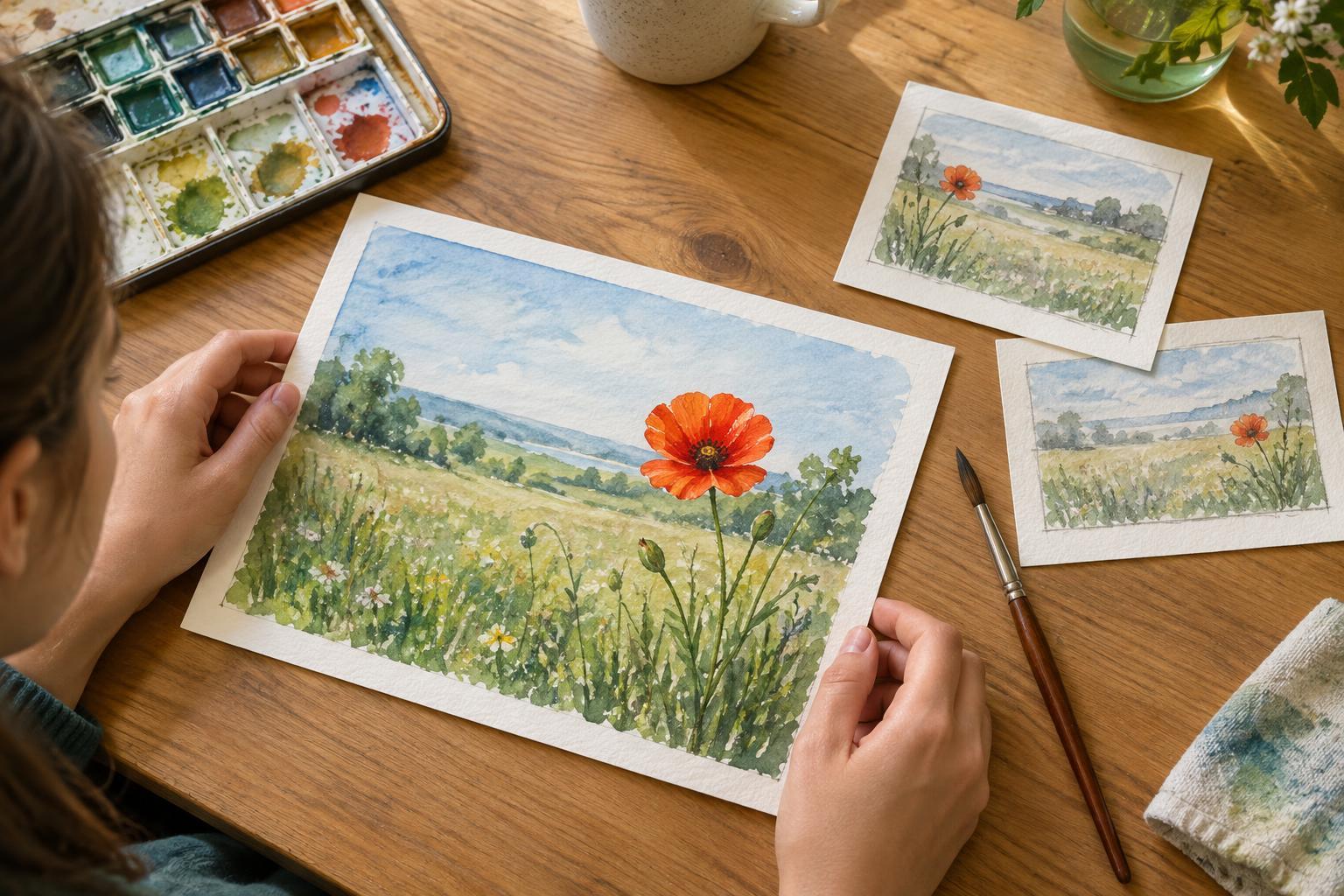
When someone looks at a drawing, painting, photograph, or collage, their eyes need somewhere to begin. That starting place is the focal point: the part you want viewers to notice first. It might be a person’s face, a bright window, or a small object that matters to the story. A focal point does not have to be in the middle, and it does not have to be the biggest thing in the picture.
Before adding details, ask yourself, “What is this artwork mainly about?” Then choose one feature that expresses your answer. If you are drawing a student waiting for a bus in the rain, the student’s face might be the focal point if you want to show their mood. The approaching bus might be the focal point if you want to show anticipation. Neither choice is automatically better; each gives the same scene a different emphasis.
Try different positions before you commit
Where you place the focal point changes how the space around it feels. A centered subject can seem steady or direct. Moving it to one side may create room for a setting, another character, or a sense that something is about to happen. You can also place a subject high or low in the frame to change how much attention goes to the ground or sky.
Make three small sketches of the same idea before starting a full piece. These quick sketches, sometimes called thumbnails, do not need polished details. In one, place your focal point near the center. In another, shift it toward an edge. In the third, leave a large area of open space beside it. Compare what each version makes you notice and how each one feels. If a subject is close to an edge, check whether it looks intentionally placed or accidentally cramped.
Make the focal point stand out
Position alone may not be enough to guide attention. Contrast can help: a light shape against a dark background, a vivid color among quieter colors, or a sharp edge surrounded by softer shapes. Detail works too. If every leaf in a scene is carefully outlined, a character’s face may struggle to stand out. Keeping less important areas simpler can give the face more attention.
Try choosing one or two ways to emphasize your subject rather than using every technique at once. For example, you could place a red backpack against a mostly blue-gray street and leave the nearby pavement fairly plain. You can check the result by looking at the artwork from across the room or briefly squinting at it. If something else grabs your attention first, consider changing its brightness, color, size, or level of detail.
Let the rest of the picture support it
A focal point is part of a composition, not a separate sticker placed on top. Other shapes can lead viewers toward it. A path, the edge of a table, or the direction a character is looking can all create a visual route. Repeated colors or shapes can connect the main subject to the rest of the artwork without making every area equally prominent.
Pay attention to open space as well. An uncluttered area around a small subject can make that subject easier to find and can help set a mood. Open space does not mean unfinished space: its size and shape are choices. If your artwork feels crowded, try removing one background detail and see whether the focal point becomes clearer. If it feels empty, add only elements that strengthen the scene or help explain the subject.
Practice with one scene, three focal points
Choose a simple scene, such as a desk with a notebook, a lamp, and a mug. Draw three quick versions. In the first, make the notebook the focal point by giving it the strongest light-dark contrast. In the second, draw attention to the lamp by placing it apart from the other objects. In the third, make the mug stand out with color or extra detail. Keep the objects mostly the same so you can see how your choices change the result.
Show the sketches to someone and ask, “What did you notice first?” You do not need them to guess a correct answer; their response gives you useful feedback. If they notice something different from what you intended, adjust one feature and check again. With practice, placing a focal point becomes less about following a fixed rule and more about making deliberate choices that help your idea come through.