Find out what “open book” means
An open-book test lets you use certain materials while answering questions, but it does not necessarily let you use everything. Your teacher might allow a textbook but not class notes, or permit printed pages but not a device. Check the instructions before you study. If anything is unclear, ask which materials are allowed, whether you may add tabs or notes, and whether the test has a time limit.
It also helps to find out what kinds of questions to expect. A question that asks you to explain a cause, compare two ideas, or apply a method to a new example takes more than locating a sentence in a book. Knowing this can help you decide what to practice instead of spending all your preparation time marking pages.
Make your materials easy to navigate
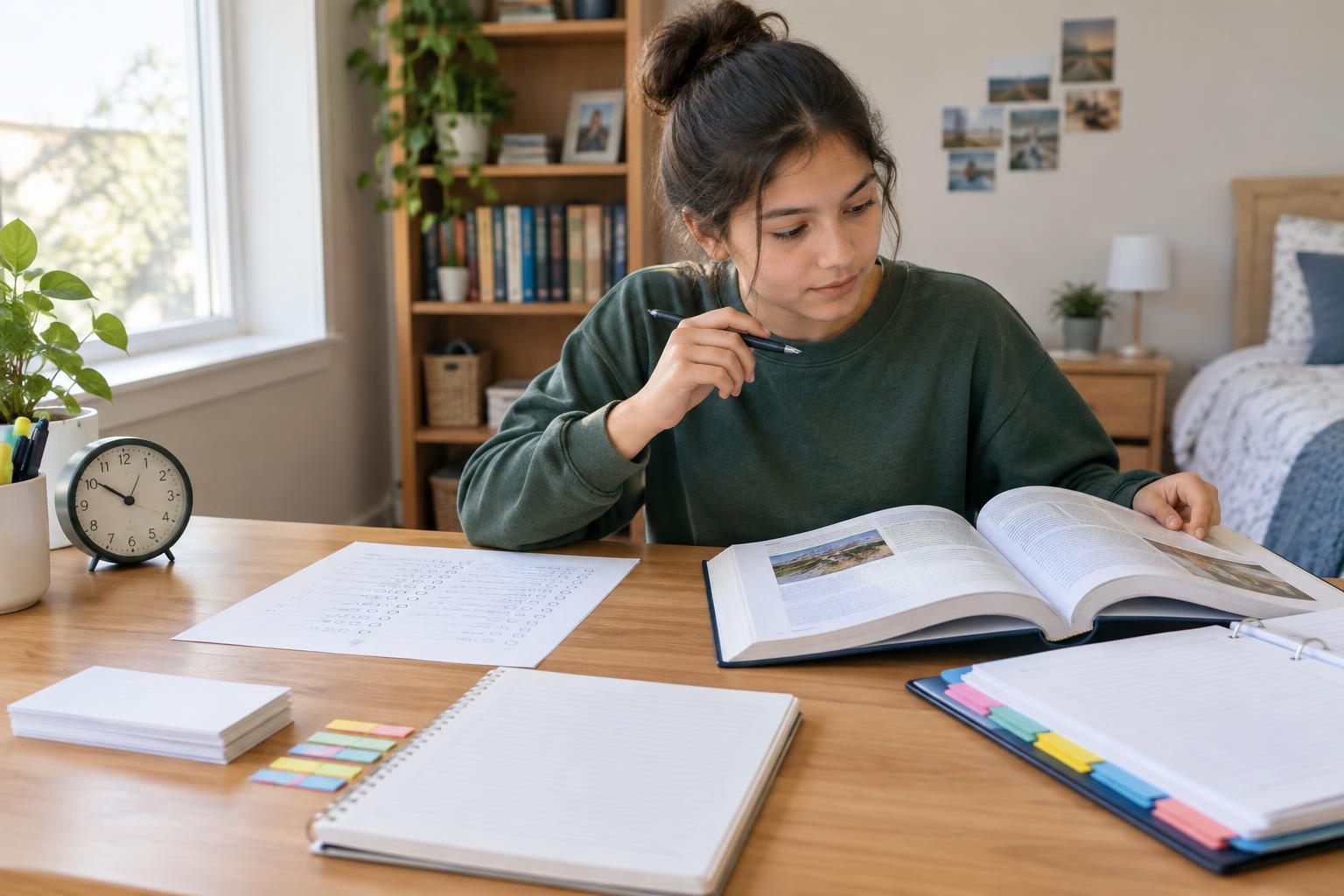
Start by identifying the main topics the test covers. Look through your lesson headings, assignments, and any review guide your teacher provided. Then locate the relevant chapters, diagrams, formulas, or examples in the materials you are allowed to bring. If tabs or annotations are permitted, use short labels that tell you what you will find, such as “fraction examples” or “causes of migration.”
Aim for a system you can understand at a glance. Too many highlighted lines or nearly identical tabs may slow you down. You could make a brief contents page that pairs each topic with a chapter or page number, if the rules allow it. The goal is not to copy the whole book into a new set of notes. It is to reduce the time you spend searching when you need to think.
Practice using information, not just finding it
Try answering a few possible questions before the test. Begin without opening the book: write what you remember and identify where you feel unsure. Then consult your allowed materials to fill the gaps and improve your answer. This shows you which ideas you already understand and which pages you may need to revisit.
When you find a relevant passage, pause before copying its wording. Ask yourself what the passage means and how it helps answer the specific question. For example, a definition might help you name a concept, but a question asking you to explain an example also needs your reasoning. If you are solving a problem, practice checking whether your result makes sense, not only whether it matches a worked example.
Checking your work is useful well beyond school tests. For a different setting in which people consider how to test a result, browse Quality and Testing · Making and Materials and think about what a good check needs to tell you.
Use test time deliberately
When the test begins, read the directions and scan the questions. Notice which answers you can start from memory and which will require a lookup. If there is a time limit, avoid spending a large share of it hunting for one perfect passage. Write down what you can explain, mark the question if you are stuck, and return to it after making progress elsewhere.
For each answer, check that you responded to every part of the question. If the prompt asks you to compare two ideas, naming both is only a start; you also need to describe a meaningful similarity or difference. Use the book to confirm details, then put the answer in your own words unless your teacher has asked for a quotation or a specific format.
If time remains, reread the questions alongside your answers. Look for skipped parts, unclear explanations, and simple errors such as a mislabeled diagram. After the test, notice which materials helped and which were hard to use. That observation can make your next round of preparation more focused.