Aim for a useful record, not a transcript
Trying to write down everything a teacher says can make it harder to follow the lesson. Useful notes give you enough to remember the main ideas, understand how they connect, and find what you need when you study. They can be brief, messy, and still do their job. The goal is not to produce a perfect page while everyone else is listening; it is to stay engaged and leave yourself a clear path back to the material.
Before class begins, write the date and lesson topic at the top of a page or document. If your teacher has shared a question, learning goal, or outline, add that too. Leave a little space between topics so you can insert details later. Use a notebook or device that your class permits and that helps you pay attention. The best setup is one you can use quickly without spending the lesson adjusting it.
Listen for ideas that deserve a place on the page
Pay particular attention when the teacher introduces a new term, explains a process, compares two ideas, works through an example, or returns to a point more than once. These moments often show what you will need to understand, not just recognize. Board work and slide headings can help you see the structure, but copying a slide without listening to the explanation may leave out why it matters.
Try turning longer explanations into short phrases in your own words. For example, instead of copying every sentence in an explanation of erosion, you might write, “Erosion = movement of weathered material; water, wind, and ice can carry it.” Add an example if it makes the idea easier to recall. If the exact wording of a definition matters, record it as accurately as you can and mark it as a definition. Otherwise, focus on meaning rather than speed.
Make relationships easy to see
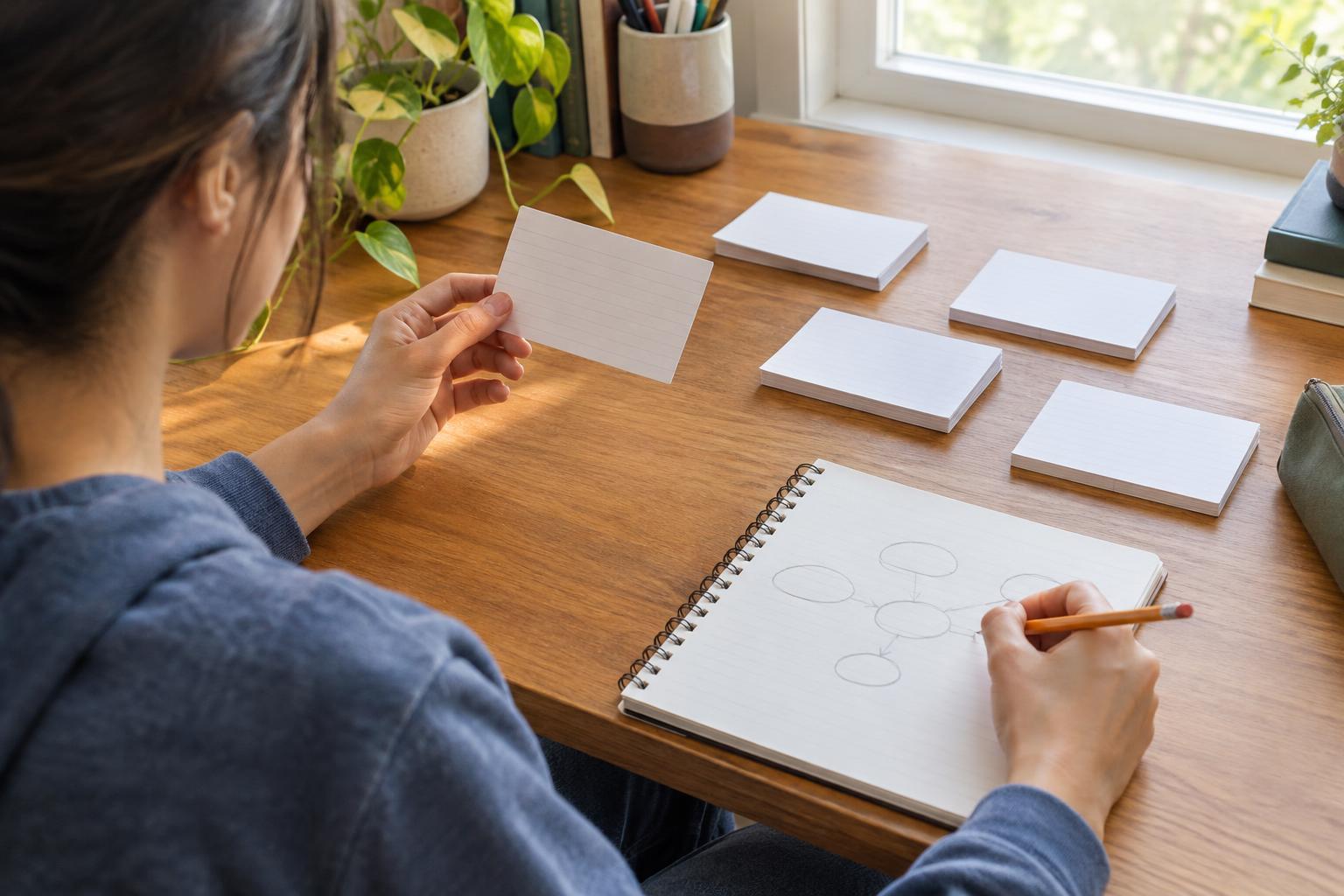
A page full of equally sized sentences can be hard to revisit. Give your notes a simple shape: a heading for each main idea, indented details underneath, and a separate line for examples. Arrows, numbered steps, or a small comparison chart can show how ideas fit together. You do not need a special note-taking system. Choose a few marks you understand, such as a question mark for something to ask about and a star for an idea you want to practice.
When the class moves quickly, use abbreviations that will still make sense to you later. Shorten common words, but write unfamiliar names and new terms clearly. If you miss a detail, leave a blank or write “check this” rather than guessing. Then rejoin the discussion. One missing sentence matters less than losing the next five minutes because you are trying to reconstruct it.
Stay involved while you write
Taking notes is only one part of learning during a lesson. Look up regularly, follow demonstrations, and notice when an example changes your understanding. If a teacher asks a question, pause to think about your own answer before writing theirs down. That quick attempt can show you what you know and where you are uncertain.
Mark questions as they occur, even if there is not time to ask them immediately. A useful question is specific: “Why does this step come before the next one?” gives you more to work with than “I don’t get it.” If a partner discussion helps clarify an idea, add the explanation in your own words. When classroom rules allow it, you can also ask a classmate to help fill a gap later. Compare notes to check your understanding, rather than treating someone else’s page as a substitute for listening.
Give your notes a short second look
Soon after class, spend a few minutes making the page usable. Fill in abbreviations you might forget, label any diagrams, and identify gaps while the lesson is still familiar. You do not have to rewrite everything neatly. A short summary at the bottom of the page—two or three sentences about what the lesson taught—can be more valuable than decorating the whole page.
When it is time to study, do more than reread. Cover a section and explain it aloud, use your notes to answer a practice question, or try to recreate a process without looking. If you cannot explain a marked point, check class materials or ask your teacher for clarification. Your notes are a tool you can revise as your understanding grows. A useful page helps you see both what you learned and what to work on next.