Decide what the group is for
Studying with classmates works best when everyone knows what they are trying to accomplish. Before you meet, name a specific task: compare notes from one lesson, practice a set of problems, quiz each other on key terms, or prepare questions for a teacher. “Study for the test” is a starting point, but it is too broad to guide a whole session. A narrower goal makes it easier to tell whether your time together helped.
Group study is especially useful when talking through an idea reveals what you do and do not understand. It is less useful if everyone needs to read a long chapter quietly for the first time. You can do that reading on your own, then meet to discuss confusing parts. If classmates are at different stages, agree on what to prepare beforehand so nobody feels lost or has to wait while others catch up.
Set a simple plan before you start
You do not need a complicated schedule. Try dividing the session into a quick check-in, a focused activity, and a few minutes to decide what comes next. For example, each person could bring one question, the group could work through those questions, and everyone could finish by writing down what they still need to practice. Choosing an end time helps keep a short meeting from turning into an unfocused afternoon.
Agree on a few ground rules that make concentration possible. Put phones out of sight unless you need them for the task, keep unrelated tabs closed, and save general conversation for a break. If you are meeting online, decide whether cameras or microphones are needed for the activity rather than assuming everyone has the same setup. A shared plan should help people participate, not make the session feel rigid.
Make everyone an active learner
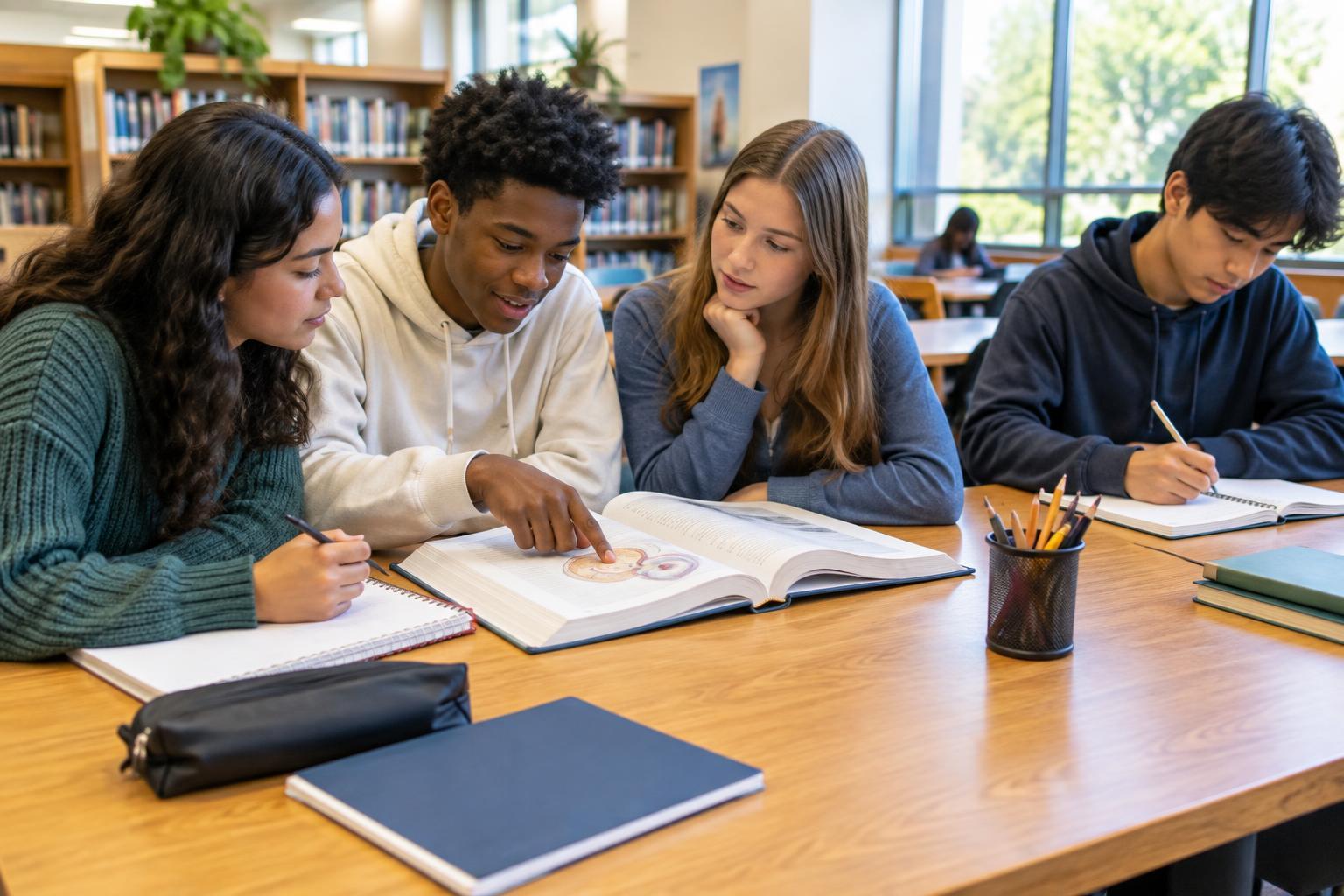
A study group is not most effective when one person does all the explaining and everyone else copies their answers. Take turns describing how you reached a solution, asking follow-up questions, or giving an example in your own words. After someone explains a concept, another person can try to restate it without looking at their notes. If the explanation is hard to follow, that is a useful signal to slow down, check the class materials, or ask a teacher later.
You can also switch roles during the session. One person might keep track of time, another might collect unanswered questions, and another might check that quieter members have space to speak. Roles should be light and changeable, not labels that make one classmate responsible for everyone else’s learning. The goal is for each person to leave knowing more than they did when they arrived.
Handle distractions and disagreements respectfully
Even a well-planned group can drift into jokes, side conversations, or arguments over an answer. A gentle reset is often enough: “Can we finish these two questions, then take a break?” If someone repeatedly changes the subject, refer back to the goal you agreed on rather than blaming them. It may also help to work quietly for a short stretch and come back together to compare results.
When classmates disagree, focus on the reasoning instead of deciding who sounds most confident. Check the assignment instructions, your notes, or an example your teacher provided. If the answer still is not clear, write down the question and move on. Respecting different ways of thinking does not mean every answer is correct; it means giving people room to explain, revise, and learn without embarrassment.
Know when to work alone
A group session should support your own learning, not replace it. Before leaving, write down one thing you understand better and one thing you need to revisit by yourself. Try a few practice questions without help to see what you can do independently. If you can only follow an answer while a classmate talks you through it, you may need another round of practice.
It is also fine to skip a group session when you need quiet time, have a different deadline, or find that a particular group is not helping you focus. You can suggest a shorter meeting, study with one classmate, or ask someone to compare questions after you have each worked alone. The best study routine is one you can adjust to the task, the people involved, and the way you learn.