Start with the reason you are reading
Imagine opening a chapter for homework. You might need to find the definition of a term, understand an argument, or decide which parts deserve extra attention. Those are different jobs, so they call for different ways of reading. Skimming, scanning, and close reading are not levels of effort from “lazy” to “serious.” They are tools for answering different questions.
Before you begin, ask yourself what you need to know when you finish. If you need the overall point, skim. If you need one identifiable fact or passage, scan. If you need to explain, evaluate, or remember an idea in detail, read closely. You can switch strategies as your purpose changes. The goal is not to move your eyes across the page as fast as possible; it is to get what you need from the text without missing what matters.
Skim to build a map
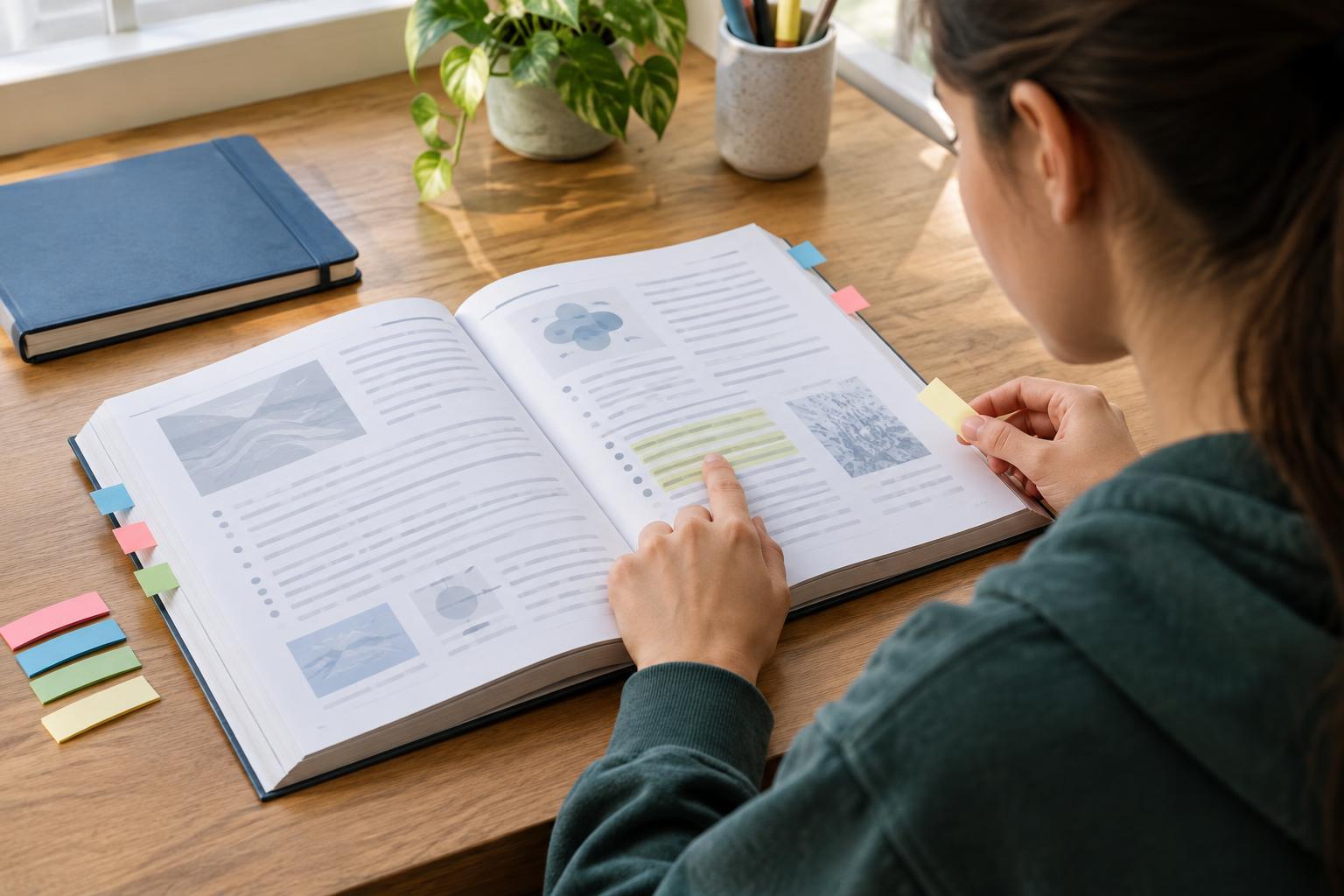
Skimming helps you see how a text is organized and what it is mainly about. Look at the title, headings, introduction, conclusion, diagrams, and any words the author has emphasized. Then read a few opening or closing sentences from each section. As you go, put the main idea into your own words: “This section explains the causes,” or “This part compares two solutions.”
Skimming is useful before a lesson, before a close read, or when choosing which sources are relevant to an assignment. It can also help you spot an unfamiliar section that will need more time. It is less useful when you must understand the steps of a process or the evidence behind a claim. A skim gives you a map, not a full tour. If you cannot identify the main topic afterward, slow down and read a little more.
Scan to find a target
Scanning means looking through a text for something specific, such as a name, date, formula, definition, or keyword. Decide what you are hunting for before you start. Your eyes can move past unrelated sentences until you find a likely match. In a digital document, a search function may help, though it is worth checking nearby text once you find the term.
Suppose a worksheet asks which materials an experiment used. You could scan for “materials,” the experiment’s name, or a list near its description. Once you find the answer, read the surrounding sentences to make sure you have not mistaken an example for the actual procedure. Scanning is fast because it narrows your attention, but that is also its limit: finding a word is not the same as understanding what the author says about it.
Read closely when meaning matters
Close reading is a slower, more attentive approach for parts of a text you need to understand or discuss. Read a short section, pause, and ask what it says and how it supports the larger point. Notice words that signal a contrast, a cause, an exception, or a conclusion. If a sentence is confusing, reread it with the sentences around it instead of treating it as a puzzle on its own.
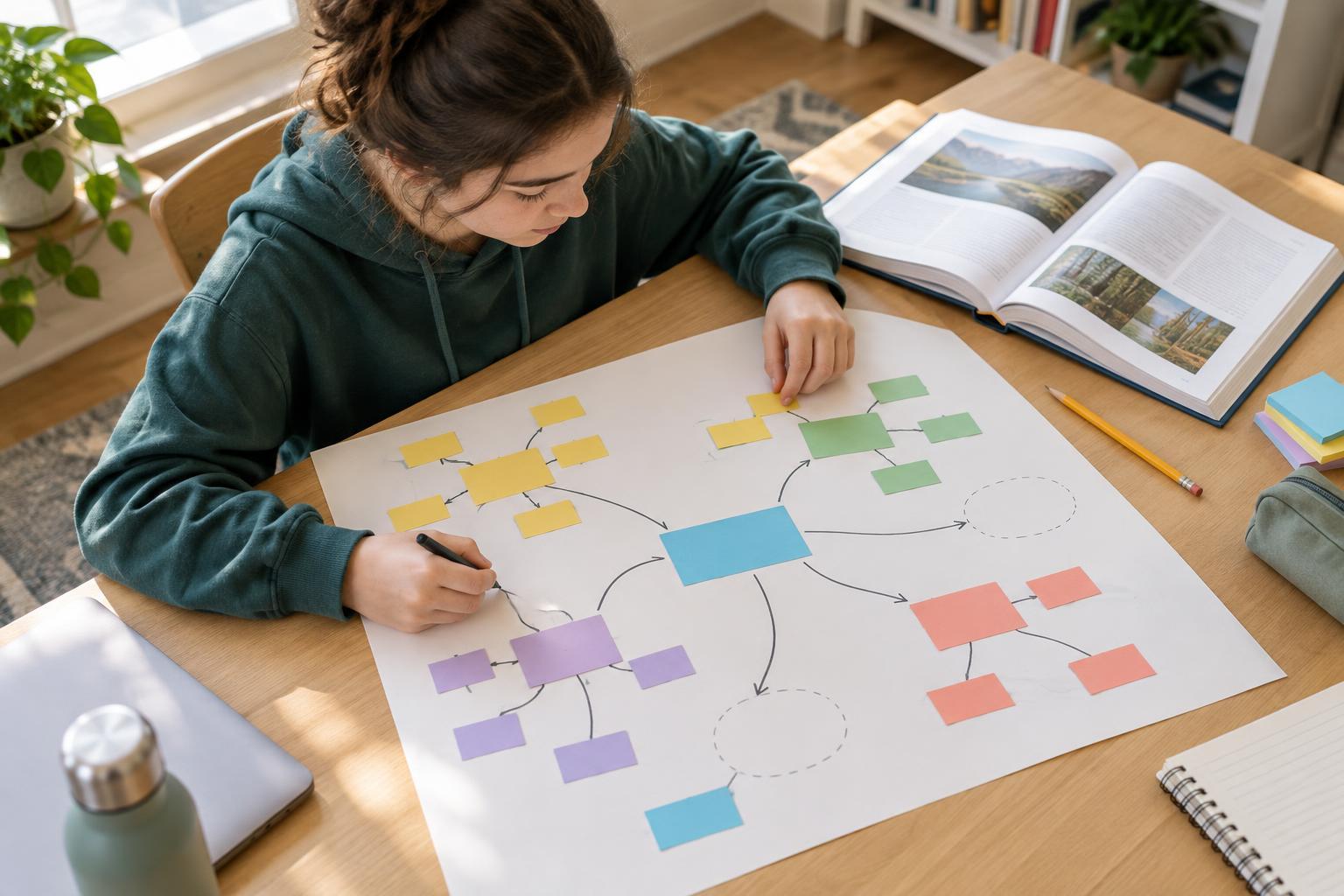
Try making brief notes in your own words rather than highlighting whole paragraphs. For example, you might write “author’s claim,” “evidence,” or “question to ask in class.” When you finish a section, see whether you can explain its point without looking. If you cannot, identify the precise place where your understanding breaks down. Close reading takes time, so reserve it for key explanations, difficult passages, and material you will need to use later.
Put the strategies together
For a history chapter, you might first skim the headings to see the sequence of events. Next, scan for a person named in your assignment. Then read closely around the passage that explains that person’s role. If the passage refers to an earlier event you do not remember, scan back to find it and read that part too. Switching approaches is a sign that you are making decisions, not that you started with the wrong one.
A simple routine is to set a purpose, choose a strategy, and check your result. After skimming, can you describe the structure? After scanning, did you verify the detail in context? After close reading, can you explain the idea in your own words? If the answer is no, change your approach. Over time, this habit can make reading feel less like completing pages and more like solving the question in front of you.