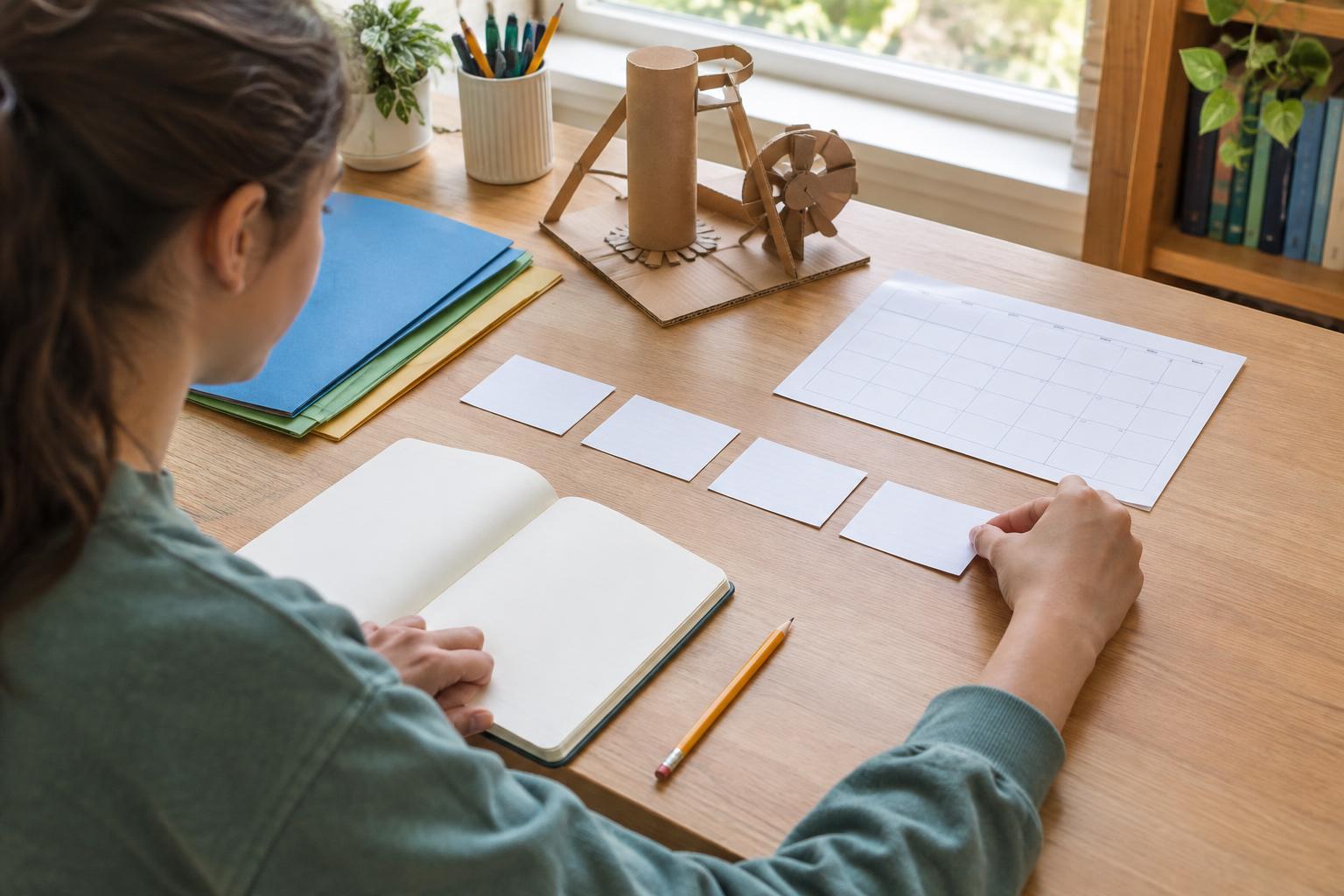
Start with the space you have
A good study space is not necessarily a quiet bedroom with a perfect desk. It is a place where you can begin your work, find what you need and keep going with fewer interruptions. That might be a kitchen table, a corner of a shared room or a library seat. Instead of trying to copy someone else’s setup, notice where you can sit comfortably and what tends to pull your attention away.
If you share your space, think about when it is available as well as where it is. A table may work well before dinner but not while others are cooking. You could agree on a study time with people at home, use a nearby library when possible or keep a portable set of supplies that lets you move. The aim is to make starting easier, even when your surroundings are not ideal.
Make the spot comfortable enough to use
Before adding decorations or organizers, check the basics. You need enough room for the work in front of you, light that lets you read without struggling and a seat you can use comfortably for a study session. If the light is poor, try moving closer to an existing lamp or window. Keep cords out of walkways, and avoid balancing devices where they could fall.
Comfort also means being able to change position. A short break to stand, stretch or refill your water can help you return to a task without treating your study spot as a place you must stay until everything is finished. If a particular chair or table makes it hard to work, try another available location. Your setup should serve the work, not become another assignment to get perfect.
Keep what you need within reach
Put your usual materials together: a pen or pencil, paper, class notes, a charger if needed and any tools specific to the assignment. A small bag, folder or box can do the job; you do not need matching containers. When you sit down, open the assignment instructions and gather its materials before you start. That small step can prevent repeated trips to look for something.
Clear only enough space for the current task. If you are solving problems, leave room for your notes and working paper. If you are reading, put unrelated worksheets aside. At the end of a session, spend a minute returning materials to their usual place and writing down what comes next. Then your future self will have a clearer starting point, even if the table has to be used for something else.
Plan for noise and digital distractions
A distraction is not always something you can remove. In a busy home, you may be able to choose a quieter time, face away from the busiest part of the room or ask others for a short period without interruptions. Headphones can help some people, while others focus better without sound. If you need to hear a caregiver or remain aware of your surroundings, choose an option that still lets you do that.
Devices deserve a plan because they may be both study tools and sources of interruption. If you do not need your phone for the task, put it out of reach or silence nonessential notifications for a set period. If you do need it, keep the assignment open and close unrelated tabs or apps. Write down a distracting thought, such as something you want to search for later, so you can return to your work without worrying you will forget it.
Adjust your setup to the task
Different work may call for different spaces. Memorizing vocabulary might be easier where you can speak aloud; drafting an essay might call for a quieter spot. A group project needs a place or call where everyone can participate respectfully. Before you begin, ask yourself what you will do first and what conditions that step requires. Then make one or two changes rather than rearranging everything.
After a few study sessions, notice what actually helped. Did having your notes ready save time? Was the lighting enough? Did you keep checking a device despite your plan? Change one thing and try again. A useful study space is not a finished project. It is a flexible setup that helps you begin, focus on the work in front of you and pack up when you are done.