Start with one character and one problem
Before writing a scene, try finishing this sentence: “My character wants _____, but _____.” The first blank gives the story direction; the second creates a reason to keep reading. A character might want to return a borrowed camera before its owner notices it is missing, but discover that the camera is damaged. The problem does not have to be dramatic. It only has to matter to the character.
For a short story, choose a problem that can change within a small number of scenes. You can still hint at a larger world, but you do not need to explain everything about it. Decide where the action takes place and what your character stands to lose, gain, or learn. Those details will help you choose what belongs in the story and what can wait for another one.
Use the beginning to set a story in motion
A beginning introduces the character’s ordinary situation and then gives them a reason to act. You might open just before the problem appears: the character is about to put the camera back when they spot the cracked lens. Readers can learn more about the friendship and the setting as the character responds. An opening does not need a long explanation of the character’s past.
Ask what question the opening invites the reader to follow. In the camera story, it might be, “Will the character admit what happened?” That question can guide later scenes. If the first page describes several unrelated events before the character faces a choice, consider starting closer to that choice. You can save background details for moments when they help readers understand an action.
Make the middle a chain of choices
The middle is where attempts to solve the problem meet obstacles. Rather than listing things that happen, connect each event to a decision. The character might first try to find out whether the camera still works. When it does not, they might consider hiding the damage, then decide to ask a friend for help. Each step should change what they know, what they risk, or what they plan to do next.
Obstacles can come from circumstances, other people, or the character’s own hesitation. They should not feel like random delays. If the central question is whether the character will tell the truth, a useful obstacle might be learning that the camera owner needs it for a project tomorrow. This makes the choice more urgent without changing the story into a different problem.
Give the character at least one moment when their first approach no longer works. That turning point helps the middle build toward an ending. You can test a scene by asking, “What is different afterward?” If the answer is “nothing,” the scene may need a sharper choice, a new piece of information, or a shorter place in the story.
Let the ending answer the main question
An ending feels connected to the story when the character’s final action grows from earlier events. Perhaps the character admits the damage, offers to help repair or replace the camera, and accepts that their friend may be upset. The conversation does not have to solve every problem immediately. It does answer the question raised at the beginning: the character chooses to be honest.
Think about what has changed as well as what has happened. The character might begin by caring most about avoiding trouble and end by caring more about keeping a friend’s trust. Show that change through a specific action or exchange rather than an explanation of the story’s lesson. A final image, such as the two friends planning how to finish the project, can leave readers with a sense of where things stand.
Make a small outline, then stay flexible
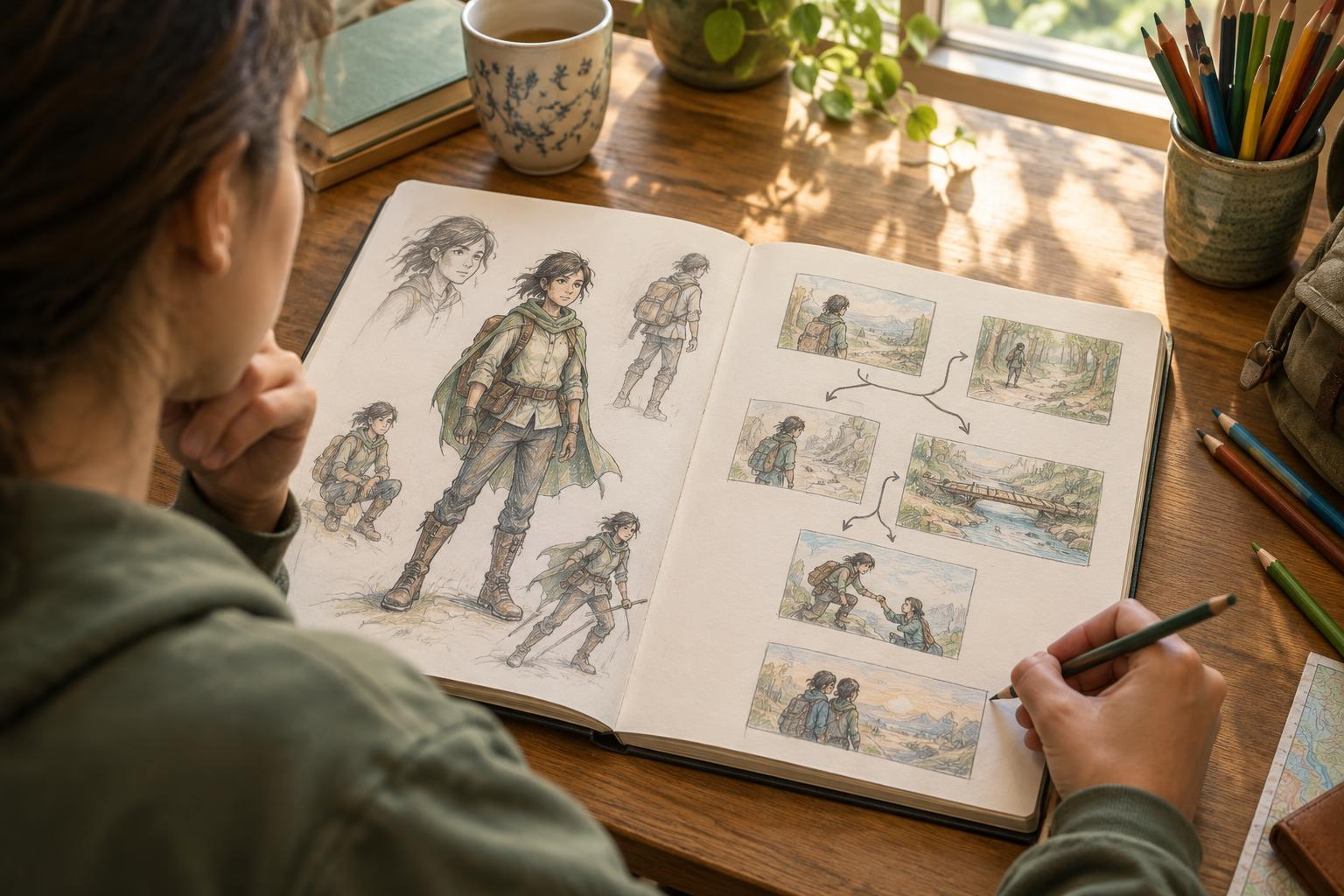
You can plan a draft in five lines: the character and goal, the event that creates the problem, two or three attempts to handle it, the hardest choice, and the result. Write one sentence for each line. This is enough to check whether the beginning, middle, and end connect without deciding every word in advance. If you prefer drawing, a few boxes with arrows can do the same job.
As you draft, you may discover a better choice for your character or a more interesting ending. It is fine to change the outline. Afterward, reread the story and ask whether readers can tell what the character wants, why each major event follows the last, and what the final choice means. Planning gives you a path; revision helps make that path clear to someone else.