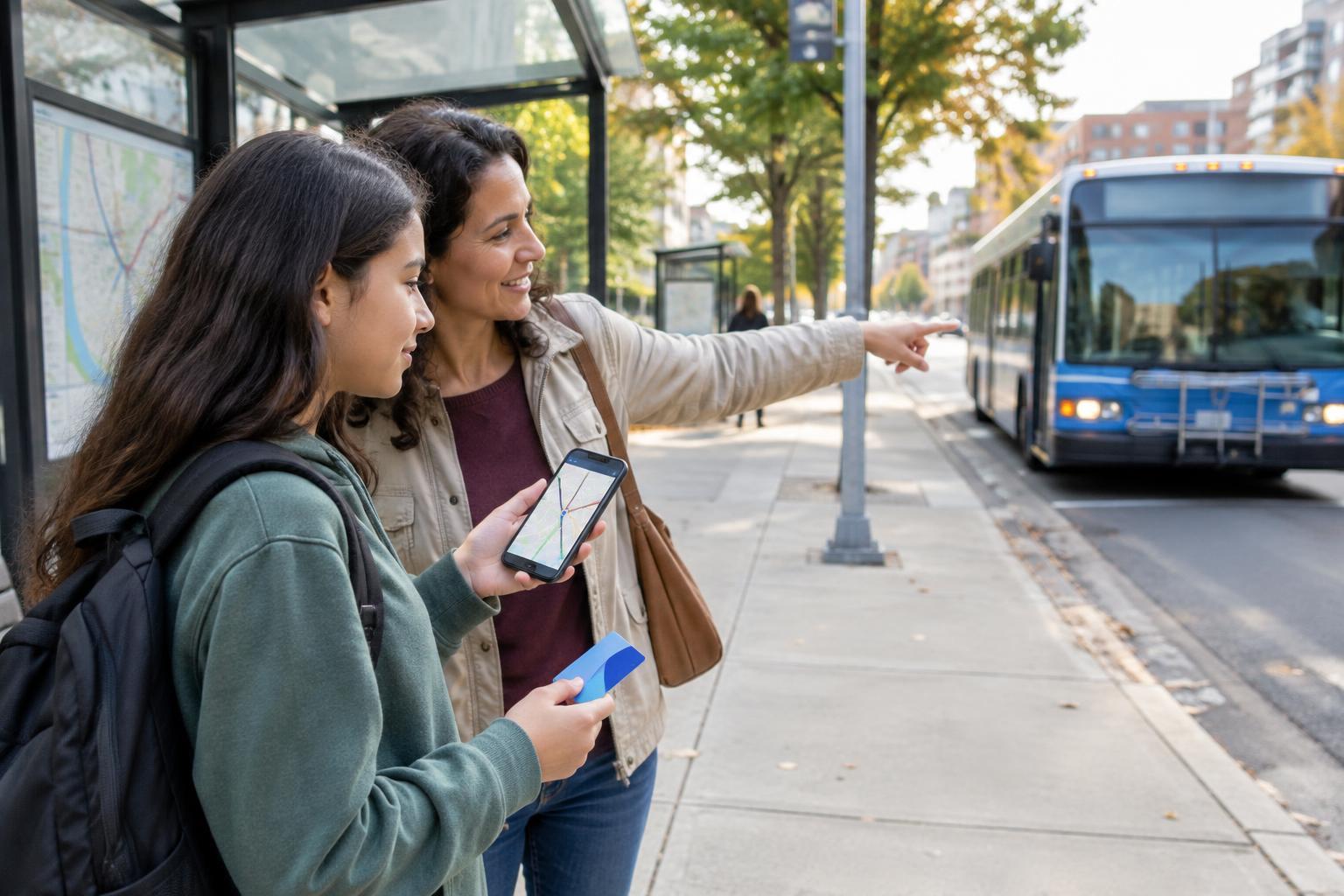
Start with the full trip, not just the first ride
Write down your destination, the time you need to arrive, and where you will start. A trip planner or transit map can show possible routes, but look beyond the route number. Find the exact boarding stop or station, the direction of travel, any transfer points, and the stop closest to your destination. Check how you will get from that final stop to the place you are visiting. A route that looks simple on a map may still involve a long walk or a confusing station exit.
Compare the trip you plan to take with your return trip. Some routes run less often at certain times, and the stop for the opposite direction may be across the street or around the corner. If you are going somewhere for the first time, allow extra time to find stops and read signs. Save the route details in a way you can use if your phone has no signal, such as a screenshot or a written note.
Check schedules, transfers, and fares
Before leaving, confirm that the route runs on the day and at the time you need it. Pay attention to the difference between a scheduled departure and an estimated arrival. If your journey includes a transfer, note both the place and the time you have to make it. A connection with only a few minutes to spare may be difficult if your first vehicle is delayed. Choosing an earlier trip can give you more room to adapt.
Find out how payment works on each part of the journey. Depending on the transit system, you may need a card, an app ticket, a paper ticket, or another accepted payment method. Check the fare for your whole trip, whether transfers are included, and whether a reduced fare requires a particular pass or proof of eligibility. If you plan to pay with cash, check whether it is accepted and whether change is given. Keep your fare ready before you reach the gate or board.
Prepare to travel with attention
Charge your phone if you use it for directions or tickets, and bring what you need for the destination as well as the journey. Pack lightly enough to keep track of your belongings. If you use mobility aids or need a step-free route, check station entrances, vehicle access, and any relevant service information while planning. Knowing where to ask transit staff for help can also make an unfamiliar trip feel more manageable.
At a stop or station, check the sign on the arriving vehicle rather than assuming it is yours. Listen for announcements and follow posted instructions, especially when platforms serve more than one route. Keep enough awareness of your surroundings to notice your stop or transfer. You do not have to share your travel plans or personal details with strangers; if you need directions, a transit employee or an official information point is often a better place to ask.
Make a backup plan before you need it
Choose a simple response to common changes. If you miss a vehicle, where can you safely wait for the next one? If a connection is canceled, is there another route you understand? If your phone battery runs low, can you still identify your destination and the stop where you should get off? Carry the address and an important contact number separately from your phone when possible. Know whom you would contact if you expect to arrive late.
If you are a teenager traveling under a family or caregiver plan, agree ahead of time about check-ins, changes of route, and what to do if you feel unsure. Do not rush across a road or board an unfamiliar vehicle just to stay on schedule. Step into a safe, well-lit public place or speak with transit staff if you need time to figure out your next move. Being delayed is usually easier to solve than getting farther from a route you know.
Use each trip to build confidence
For a first trip, consider practicing part of the route with someone you trust or traveling at a time when you do not have a tight deadline. Afterward, note what was clear and what you would check more carefully next time. Perhaps the boarding stop was hard to spot, or the return fare worked differently than expected. These small observations turn a route from a set of instructions into a skill you can reuse.
You do not need to memorize an entire transit network to travel independently. A useful plan answers a few questions: Where do I board? How do I pay? Where do I change or get off? How do I return? What will I do if something changes? Once you can answer those questions, you have a practical starting point for the journey.