Start with one small idea
A song can begin with a feeling, a few words, or a sound you like. You do not need to plan an entire verse and chorus before you start. Choose one simple idea, such as the excitement of going somewhere new or the calm of an ordinary afternoon. Give yourself permission to make a short song rather than a finished masterpiece.
You can work with your voice, an instrument, or a free recording tool you already have access to. If you have none of those handy, tapping a table and humming are enough. Find a place where you can make sound comfortably, and keep paper or a notes app nearby to save ideas. The goal is to capture something you can return to, not to perform perfectly on the first try.
Build a rhythm you can repeat
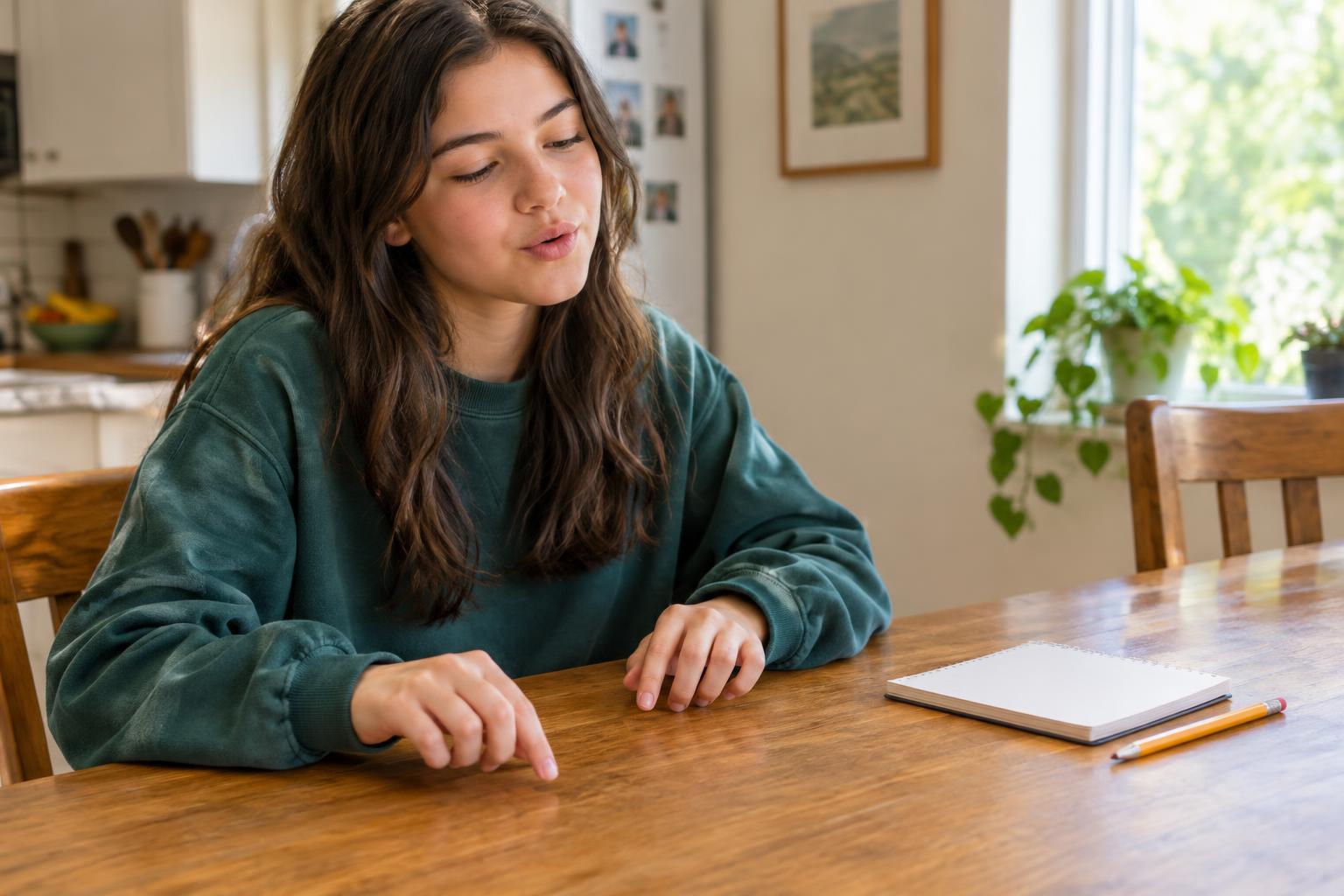
Rhythm is the pattern of sounds and pauses in time. First, tap a steady beat at a pace that feels natural. Count “one, two, three, four” as you tap, then repeat. Once the beat feels comfortable, add a different sound on some counts: a clap on two and four, for example, or a quieter tap between beats. Use your hands, footsteps, or objects that are safe to tap.
Try repeating your pattern four times without changing it. If that is difficult, simplify it. Pauses matter as much as taps; leaving space can make a pattern easier to follow and give a melody room to breathe. Record a short version or write it in your own shorthand, such as “tap, clap, tap, clap.” There is no required speed or pattern. Choose one you enjoy hearing again.
Find a melody with just a few notes
A melody is a sequence of notes that someone might hum after the song ends. Keep yours short to start. While your rhythm repeats, hum three or four notes. Let some notes stay the same and let others move higher or lower. If you are unsure what to sing, speak a sentence about your idea and notice how your voice naturally rises and falls. Then exaggerate that shape into a tune.
Repeat the tune a few times so you can tell which parts you like. Change one note at a time instead of starting over whenever something sounds odd. A melody does not need to cover a wide range; a small group of notes can be memorable. If words make it harder to experiment, use “la” or another easy sound until the tune feels settled.
Put the parts together
Play or tap your rhythm while singing your melody. They may not fit neatly at first. You can hold a note longer, leave a pause before the next phrase, or remove a tap that competes with your voice. Make one change, try the whole pattern again, and listen for whether it feels easier to follow. A short recording can help because you may notice different things when you are listening rather than performing.
If you want lyrics, write one or two lines connected to your starting idea. Try singing the words to your melody. If a line feels crowded, use fewer words; if it feels empty, stretch a word or add a pause before the next line. Repeat the melody with new words to make another section, or keep the entire song to a few lines. A complete short song is a worthwhile result.
Revise and share on your terms
After a break, listen to what you made and name one part you want to keep. Then choose one small improvement, such as making the beat steadier or changing the ending so it feels complete. Save your first version before revising. Hearing both versions later can show how your choices shaped the song, even if you decide you prefer the earlier one.
You can keep your song private, play it for someone you trust, or invite a friend to add a sound. If you collaborate, agree on how you will use and share the recording before posting it anywhere. Feedback is most useful when it is specific: ask what part was easiest to remember or where the rhythm became hard to follow. Making a song is a way to practice noticing, choosing, and experimenting. Each attempt gives you another idea to build on.