Start with what is around you
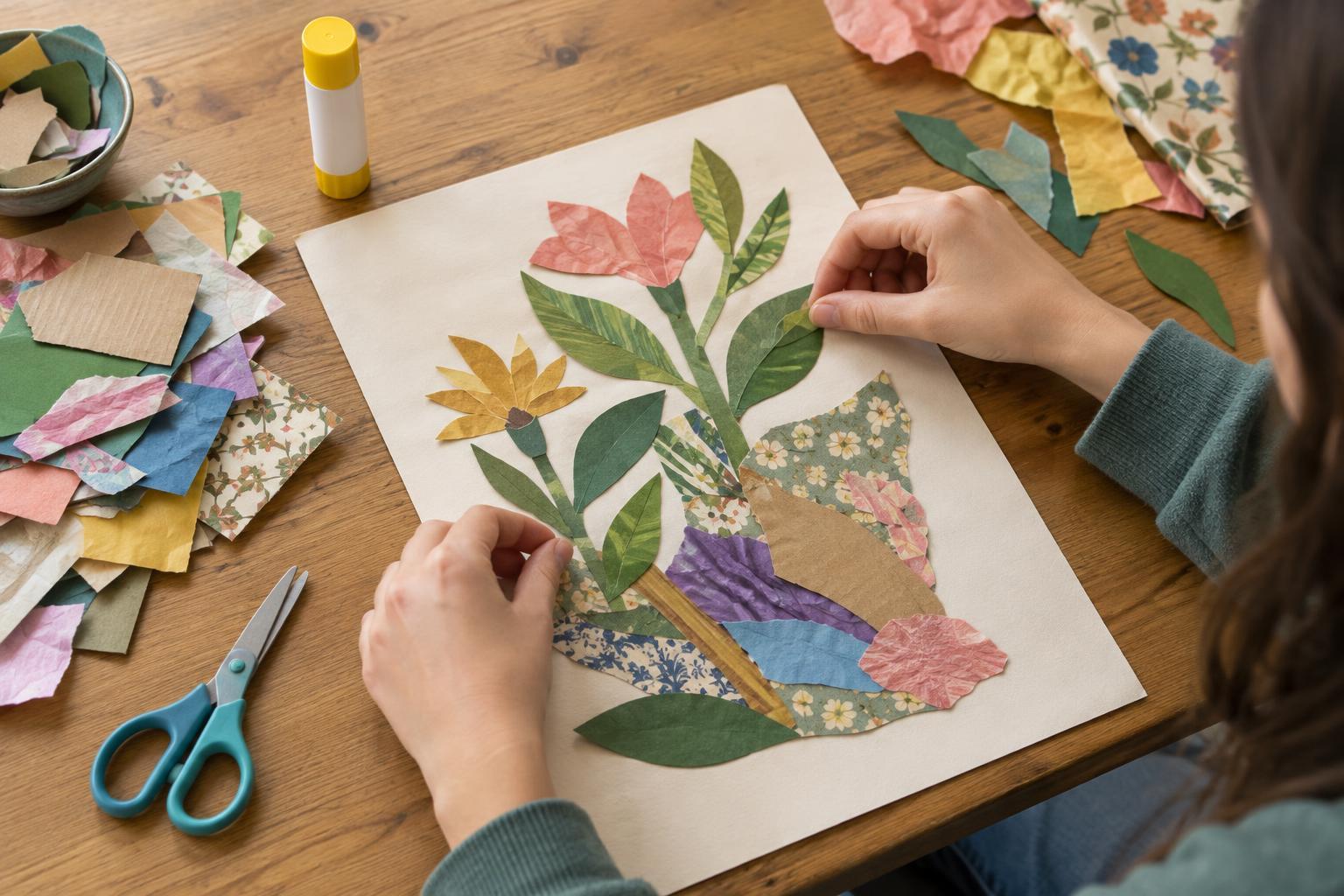
Collage is the art of bringing separate pieces together to make a new image. You do not need special paper or drawing skills to begin. A cereal box, a used envelope, a shopping bag, or the blank side of an old worksheet can become part of your materials. Reusing paper also makes it easier to experiment: if an idea does not work, you can move the pieces and try another arrangement.
Gather a small selection rather than emptying every drawer. Look for differences in color, texture, lettering, and thickness. Clean, dry packaging, magazines that no one needs, paper offcuts, and unwanted flyers are useful choices. Ask before cutting up anything that belongs to someone else, and leave documents with names, addresses, or other private details out of your project. If you find paper outdoors, skip anything wet, dirty, or sharp.
For a base, choose a piece of card or sturdy paper that can support several layers. You will also need scissors, a glue stick or another paper-friendly adhesive, and a space where you can spread out your pieces. If younger children are joining in, choose tools they can use safely and share the cutting tasks as needed.
Choose an idea, then collect shapes
A collage can show a place, tell a small story, or explore a feeling without spelling everything out. You might make a picture of an imaginary room, a map of a favorite walk, or a portrait built from colors and objects instead of facial features. A simple prompt helps you decide which scraps to keep: “What does a relaxing afternoon look like?” is easier to work with than “Make something amazing.”
Do not worry if you cannot find a picture of exactly what you imagined. Cut a building from rectangles, make clouds from torn white paper, or use a strip of printed words as a road. Torn edges often look softer; cut edges can make a crisp outline. You can also use the existing patterns on packaging as blocks of color. Save a few unusual scraps even if you do not yet know where they belong.
Arrange before you glue
Place a few large shapes on your base first. They can establish a background or give the eye somewhere to land. Add medium pieces next, then try smaller details. Move things around and notice what changes: Does the main subject stand out? Is one side much busier than the other? Neither answer is automatically wrong, but seeing the difference helps you make a deliberate choice.
Try overlapping pieces to suggest depth. A figure in front of a doorway, for example, may feel closer than the doorway itself. Leaving some of the base uncovered can give a crowded design room to breathe. Turning a scrap upside down or sideways may make its color and shape more useful than its original picture or text. If you get stuck, take a short break and look again before attaching anything.
Build the collage in layers
Once you like the arrangement, glue the background pieces first and work toward the foreground. Move only a few pieces at a time so you can remember where they went. Apply adhesive near the edges, press each piece gently into place, and allow it to dry flat. Thin paper may wrinkle if you use too much liquid glue, so test your adhesive on a spare scrap if you are unsure.
Your collage does not have to be made of paper alone. A pencil line, a small handwritten label, or a bit of coloring can connect separate pieces. Keep additions manageable; the goal is to help your idea come through, not to fill every space. When you are done, put usable leftovers in an envelope or box for another project and recycle what your local collection accepts.
Make room for your own interpretation
There is no single correct way to read a collage. Someone else may notice a pattern or story you did not plan, and you may discover that your favorite detail is a scrap you nearly discarded. If you share your work, you can explain one choice you made and ask what the other person notices. You do not have to defend every part of it.
Making something from found paper is practice in seeing possibilities. It asks you to choose, rearrange, revise, and decide when a piece feels finished. Those skills matter more than producing a perfectly neat result. Keep the collage, give it to someone, or use it as the starting point for another one.