Start with a clear space
Cleaning the kitchen is easier when you know what belongs where. Put leftover food in a suitable container and refrigerate it if it needs to be kept cold. Scrape scraps into the appropriate bin rather than pushing them down the drain. Move dishes to the sink or dishwasher, and set aside anything that needs special care, such as a wooden cutting board or a pan with a delicate coating.
Before handling clean dishes, wash your hands with soap and water. Gather dish soap, a sponge or brush, a clean cloth, and a towel or drying rack. Keep a separate cloth or paper towels available for messes involving raw meat, poultry, or fish. If your family has a particular system for sorting waste or loading the dishwasher, ask about it. Following the household routine makes cleanup quicker for everyone.
Wash dishes in a sensible order
Check whether an item is dishwasher-safe before loading it. In a dishwasher, place items so water can reach dirty surfaces without pieces nesting tightly together. Put sharp knives where someone unloading them can see and handle them safely; follow the dishwasher instructions and your household’s rules for whether knives should be washed by hand.
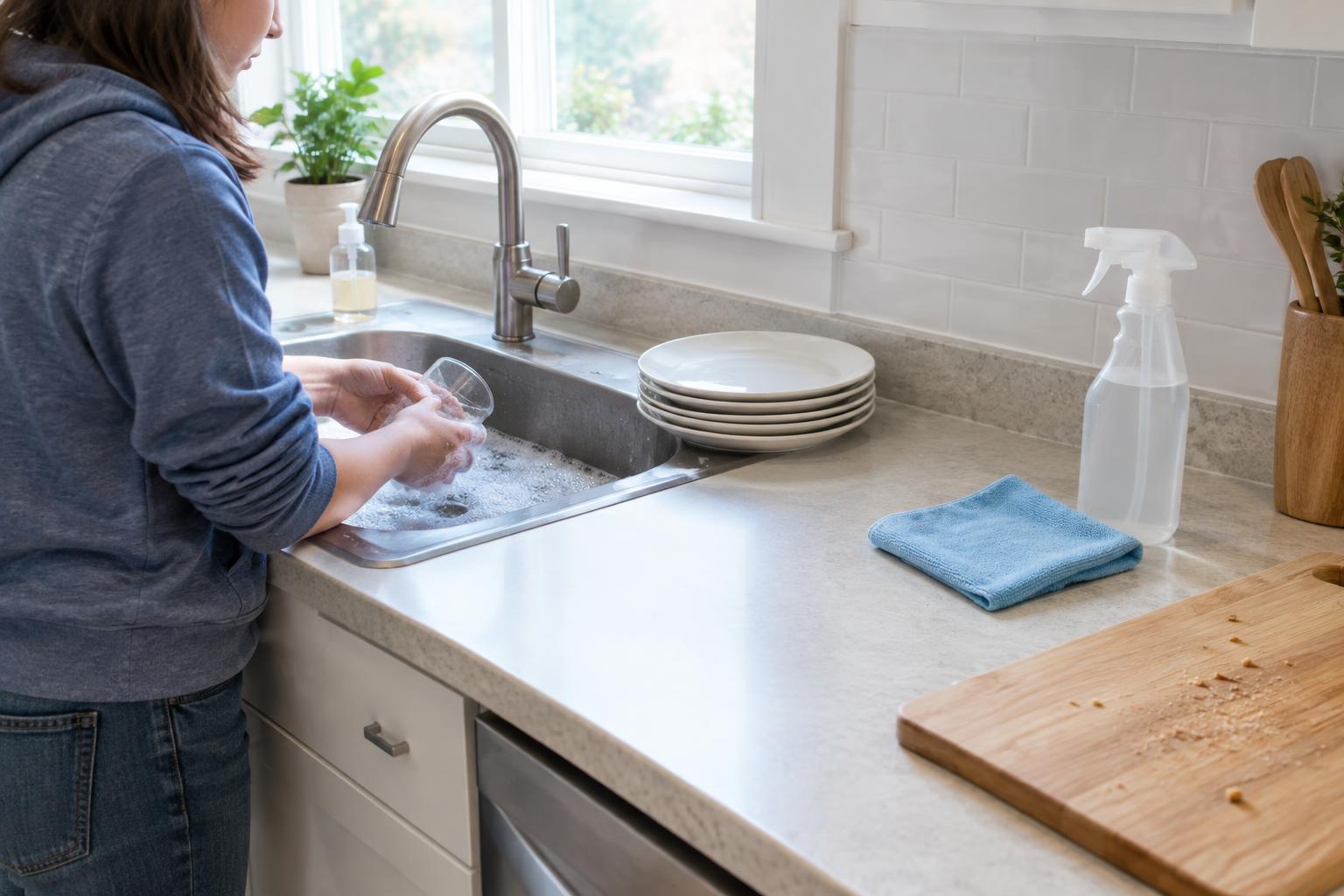
For handwashing, fill the sink or a basin with comfortably warm water and a small amount of dish soap, or wash under running water if that works better for your setup. Wash less greasy items, such as glasses and cups, before plates and oily pans. Scrub food-contact surfaces, handles, rims, and the backs of utensils. Rinse off soap and loosened food with clean water. Replace cloudy or greasy wash water instead of trying to clean everything in it.
Never reach blindly into a sink full of dishes: a knife or broken glass may be hidden below the water. Wash sharp knives one at a time, keeping the blade pointed away from your fingers, and put them somewhere visible to dry. If glass breaks, tell an adult if you need help; pick up large pieces carefully and use a suitable tool for tiny fragments rather than your bare hands. Let washed dishes air-dry on a clean rack, or dry them with a clean towel before putting them away.
Clean counters without spreading messes
A tidy-looking counter is not always a clean one. First remove crumbs and spills so you do not smear them around. Then wash the surface with water and a little dish soap or a cleaner suitable for that material. Pay attention to places hands touch often, such as faucet handles and cabinet pulls. Use a clean cloth rather than one that has already wiped up food scraps.
If a surface or cutting board touched raw meat, poultry, fish, or their juices, keep those juices away from ready-to-eat foods and clean the affected area promptly. Wash the surface with soap and water, then follow household instructions and the product label if sanitizing is needed. Different counters and cutting boards have different care requirements, so check before using a strong product. Never mix cleaning chemicals, especially bleach with other cleaners, and keep sprays away from food and dishes.
Finish the job, not just the visible part
Empty any food scraps from the sink strainer and give the sink a quick wash and rinse. Rinse out sponges or brushes, squeeze out excess water, and leave them where they can dry. Put damp cloths in the laundry when they are dirty rather than leaving them bunched on a counter. A wet, messy cleaning tool can make the next cleanup harder.
Check the floor for drips, especially near the sink, where someone could slip. Wipe them up with a suitable cloth or mop. Put cleaning products away according to their labels and wash your hands when you are finished. Before you leave, look around: Are dishes drying safely? Are counters clear? Is the sink ready for the next person? Those small checks turn a rushed chore into a useful routine.
Make the routine fit your household
You do not need to wait for a large pile of dishes to practice. After making a snack, wash the utensil you used, wipe the preparation area, and put supplies away. After a shared meal, divide the work: one person can clear the table while another loads the dishwasher or washes pans. Agreeing on the jobs before starting helps avoid confusion.
If you are unsure about a cleaner, an appliance setting, a sharp item, or a surface that may be damaged by water, pause and ask someone who knows the kitchen. Independence does not mean guessing. It means learning a repeatable way to leave the space clean, safe, and ready for the next meal.