Treat the quiz as a check-in, not a verdict
A practice quiz can show you what you remember well enough to use and what still needs attention. Its most useful result is not the number at the top of the page. It is the information behind each answer: what you knew, what you guessed and where you got stuck. Missing a question during practice gives you a chance to work on it before it matters more.
Start by choosing a quiz that matches what you are learning. If you are preparing for a class test, include questions from the topics you expect to be responsible for, rather than practicing only your favorite chapter. Try the quiz without checking notes unless the real task will be open-note. Give yourself enough time to think, but do not spend so long on one question that you never reach the others.
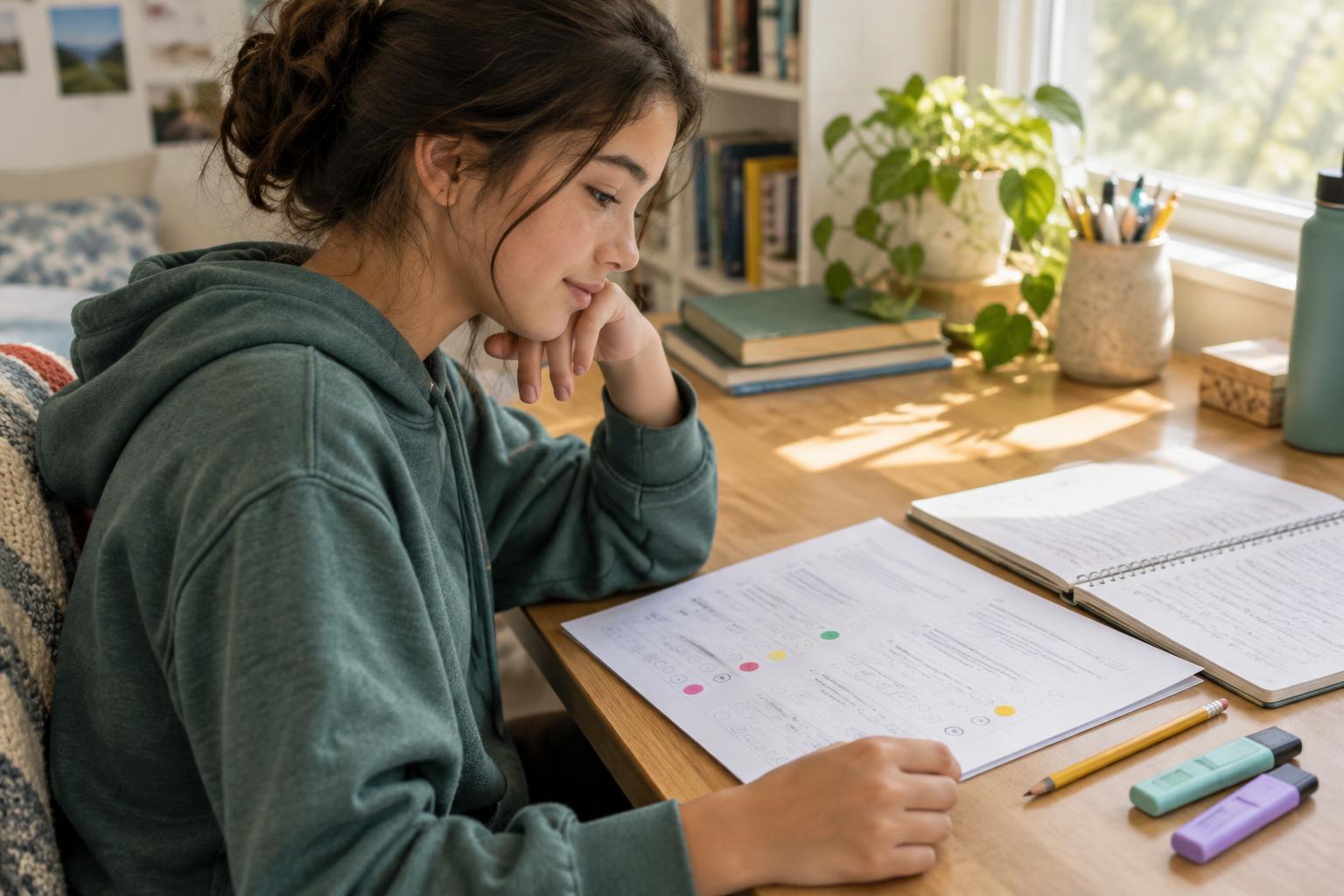
Mark what happened on each question
When you check your answers, look beyond right and wrong. You might label each question “knew it,” “guessed,” “partly knew it” or “didn’t know where to start.” A correct guess deserves another look: you got the point, but you may not be able to repeat it. A wrong answer can also tell you something useful if you can explain exactly where your thinking went off track.
For each uncertain or missed question, write a brief note about the reason. Did you forget a term, mix up two ideas, skip a step or misread what the question asked? If you cannot tell, that is useful information too. Mark it as something to ask about or explore with an example. Keep the notes short enough that you will actually use them during your next study session.
Look for patterns before choosing what to review
One missed question does not always mean you need to reread an entire unit. Group your notes by topic or skill instead. If several questions involve the same kind of fraction problem, that skill is a clear place to start. If you know the facts but struggle to explain how they connect, practice putting the idea into your own words. If mistakes appear mostly on questions with long instructions, slow down and underline what each question is asking you to do.
Also notice the size of the gap. “I forgot one word” calls for a different response from “I do not understand how this process works.” Choose one or two priorities for your next session, especially if the quiz covers a lot of material. A short, specific goal such as “practice choosing the right formula and explaining why” is easier to act on than “study science.”
Study the gap, then try again without help
Match your review method to the problem you found. For a forgotten fact, make a question card and answer it from memory. For a confusing idea, compare two examples and explain their differences aloud or in writing. For a process with several steps, work through a fresh problem, checking your method afterward. Looking at the correct answer can help, but being able to recognize it is not the same as being able to produce it yourself.
After reviewing, close your notes and try a few new questions on the same skill. If you only repeat the original quiz, you may remember the answers without understanding the material. A new question gives you a better check. If the topic still feels unclear, return to a simpler example or ask a teacher, classmate or trusted adult a specific question based on where you got stuck.
Use the next quiz to adjust your plan
You do not need to fix everything in one sitting. After your focused practice, take another short quiz later and compare the types of mistakes you make, not just the total score. Maybe you now remember the key terms but still have trouble applying them. That means your next step is application practice, not another round of memorizing definitions.
Keep a small record of the topic, the difficulty you noticed and what you will try next. It can be as simple as three lines in a notebook. Over time, this helps you spend less energy guessing what to study. A practice quiz has done its job when it leads to a clearer next step, even if the first attempt did not go as you hoped.