Start with the rules for your address
Recycling works differently from place to place. A container accepted in one town may not be accepted in another, and rules can even differ between a house and an apartment building. Before sorting, find out who collects recycling at your address. Check the instructions on your bin, a notice from your building, or the website of your local council or waste collector. If those instructions disagree, ask the person who manages your household waste or contact the collector for clarification.
Look for a list of accepted materials, preparation instructions, and items that need separate drop-off. Pay attention to details: Are glass bottles collected at the curb? Can paper and containers go in the same bin? Should lids stay on bottles? Save the relevant instructions somewhere easy to find, such as a note on the fridge. When a rule changes, update the note rather than relying on what everyone remembers.
Sort by material, then check the exceptions
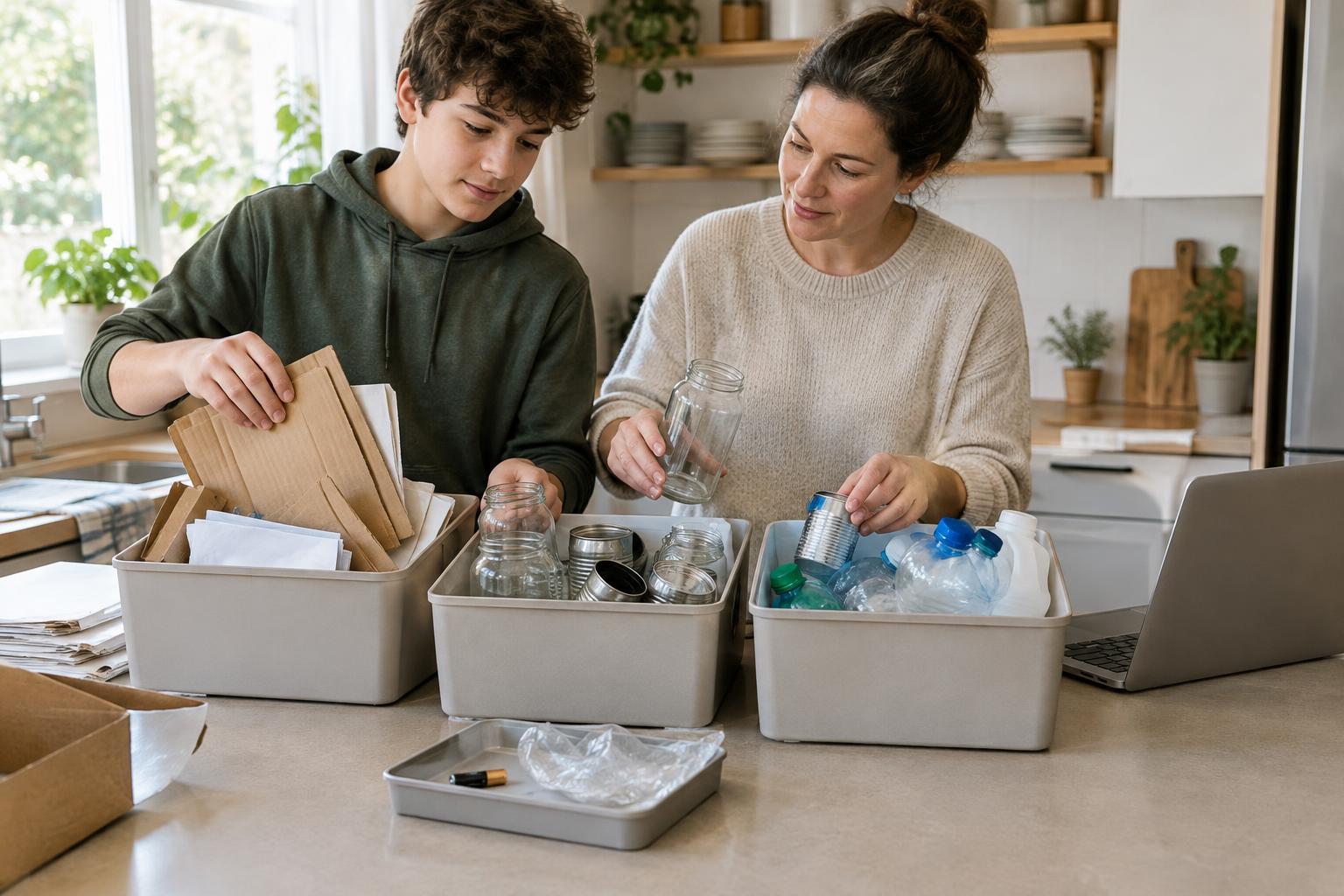
Start with the broad groups your local service names, such as paper and cardboard, metal cans, glass containers, and certain plastic containers. An item’s material is a useful clue, but it is not a guarantee. The recycling symbol or a number stamped on plastic identifies a type of material; it does not mean your local program accepts that item. Shape may matter too. A service might accept plastic bottles and tubs but not plastic wrap or foam packaging.
For each item, ask three questions: What is it made of? Does the local list accept this type of item? How should it be prepared? Flatten cardboard if requested, and empty containers before placing them in the bin. Follow local guidance on rinsing; a quick rinse may be enough for some containers, while others may not be accepted at all. Avoid putting food scraps, liquids, or greasy packaging into a recycling bin unless your rules specifically allow them.
Give tricky items their own place
Some items look recyclable but need a different route. Batteries, electronics, light bulbs, paint, and other household chemicals may have special collection options. They should not be put into ordinary recycling just because they contain metal, plastic, or glass. Check local instructions and ask an adult for help with anything that could leak, break, or be unsafe to handle.
Soft plastic bags and wrapping, disposable cups, and mixed-material packaging can also be confusing. A package might combine paper, plastic, and foil in ways that are difficult to separate. If your local guide does not clearly accept an item, do not guess based on the packaging label alone. Keep a small “check later” spot for uncertain items, then look them up before collection day. If you still cannot confirm that an item belongs in the recycling bin, follow your local disposal guidance rather than adding it and hoping for the best.
Set up a system that is easy to use
The best household sorting setup is one people can follow on a busy day. Put bins where waste is usually created, and label them with specific examples from your local rules. “Bottles, cans, and accepted tubs” is more helpful than “recycling” if those are the items your service collects. Place a small reminder nearby for common mistakes, such as keeping plastic bags out of the curbside bin.
Agree on simple jobs with the people you live with. One person might empty and sort containers, another might break down boxes, and someone else might check the collection schedule. If a younger family member wants to help, give them clear, safe tasks and have an older person handle sharp or questionable items. A brief check before the bins go out can catch mistakes without turning sorting into an argument.
Keep learning without aiming for perfection
You do not have to memorize every packaging type. When an unfamiliar item appears, check the local guide and use what you learn next time. If the guide is unclear, make a note of the item and ask the collector a specific question, such as whether it accepts that type of plastic container. Clear questions are easier to answer than “Is this recyclable?”
Recycling is one useful household habit, but it is not the only way to reduce waste. Using what you already have, choosing reusable items when practical, and avoiding unnecessary packaging can mean fewer items need sorting in the first place. The goal is a dependable routine: use the rules for your address, keep the bins reasonably clean, and adjust when you learn something new.