Choose a goal you can picture
A savings goal begins with a specific reason to set money aside. “Save more” can be hard to act on because it has no clear finish line. “Save for a pair of headphones” or “put money toward a class trip” gives you something to plan for. Choose a goal that matters to you, rather than one that sounds impressive to someone else. It is also fine to decide that your first goal is simply to keep a small amount available for unexpected costs.
Next, work out roughly how much you need. Check the full cost, including any extras such as delivery, supplies, or admission. If you do not know the exact amount yet, use an estimate and update it later. Write down what you are saving for, your target amount, and why you chose it. Those details can help you decide whether the goal still matters when you are tempted to spend the money on something else.
Make a plan that fits the money you have
Look at money you might receive, such as an allowance, gifts, or earnings from occasional work. Then consider what you already need or have agreed to pay for. The amount left over may change from week to week, and that is normal. Choose a contribution you could make without counting on money that has not arrived. If your income is irregular, a rule such as “save part of each amount I receive” may be more useful than promising the same amount every Friday.
To see what your plan could look like, imagine a goal that costs $60. If you already have $12 set aside, you have $48 left to save. Putting aside $6 each week would take eight weeks, provided you can keep that pace and the cost stays the same. This is a planning example, not a deadline you have to meet. A slower plan that works for your life is more helpful than an ambitious plan you cannot maintain.
Give your savings a clear place
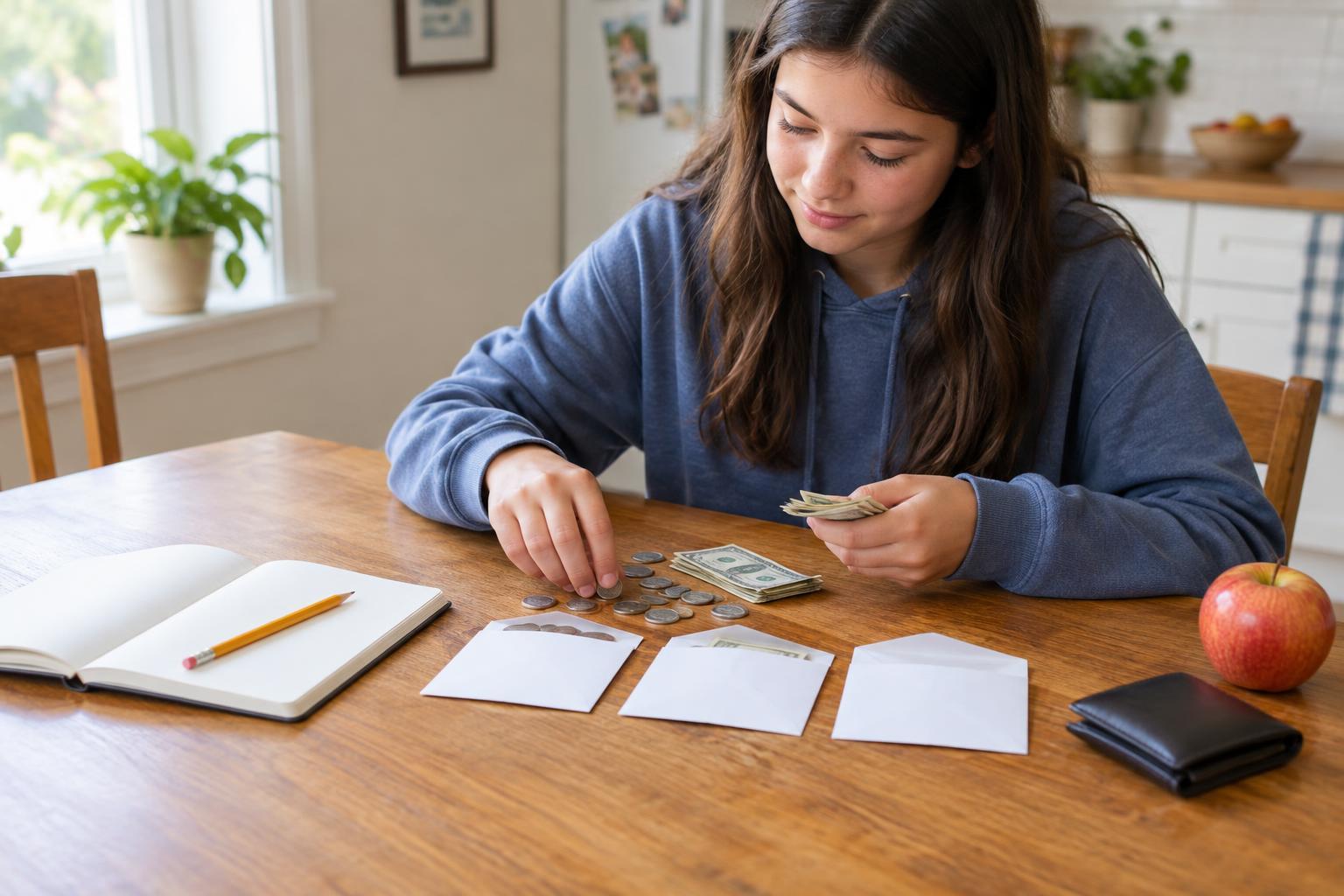
Keeping goal money separate from spending money makes it easier to tell what is available. You might use a labeled envelope, a dedicated space in a notebook, or an account feature that lets you identify a goal, if one is available to you. Choose a method you can use safely and understand. If you are considering an account or payment tool, ask a trusted adult to help you review how it works, including any access rules or fees.
You do not need a complicated system. Record the date, the amount added or taken out, and the new total each time your savings change. For example, a note might say, “Added $6; new total $18.” If you use cash, count it when you update your record. If you use a digital balance, compare your notes with what the tool shows. The point is to make your progress visible, not to create extra homework.
Check progress without judging yourself
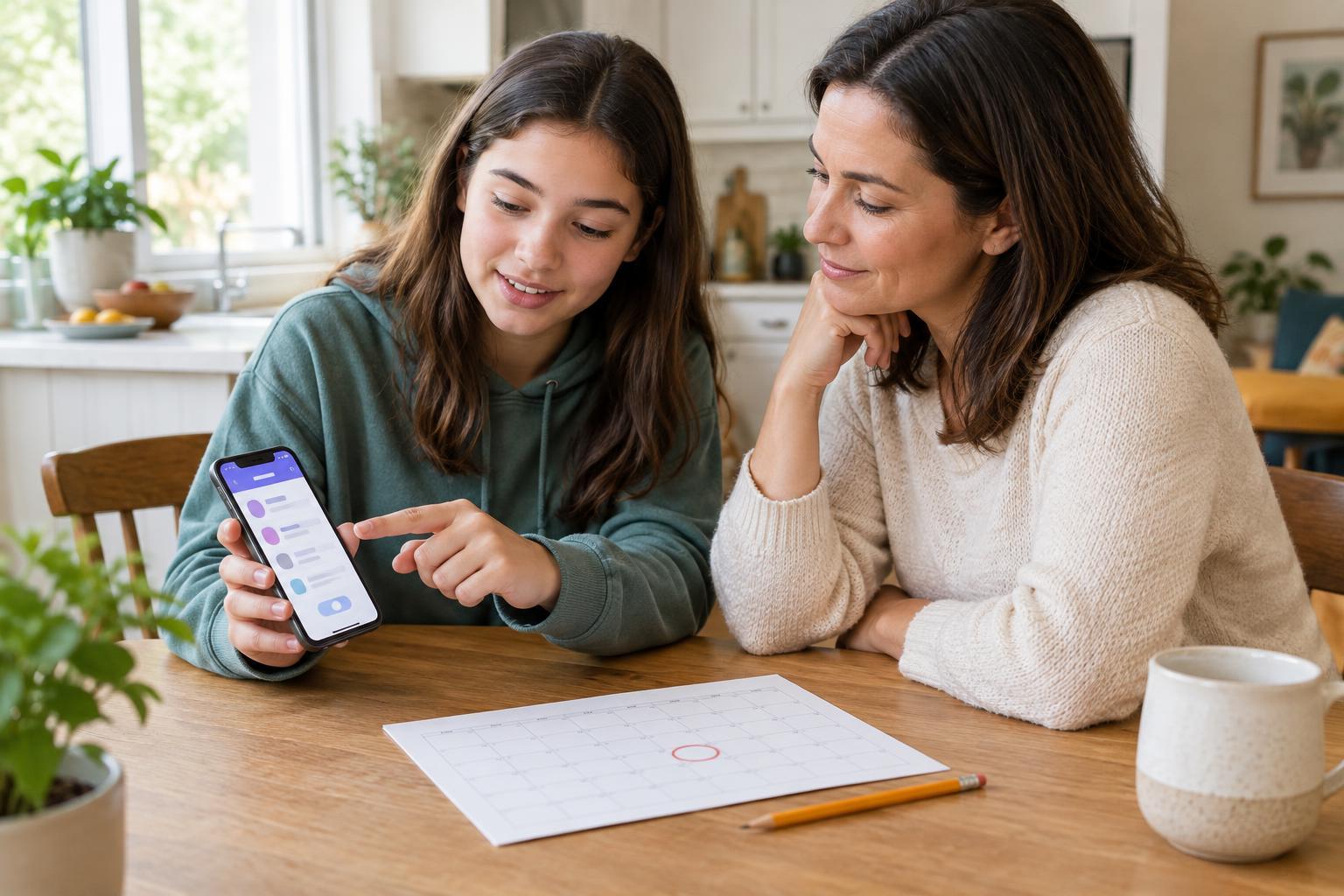
Pick a regular time to review your goal, perhaps once a week or whenever you receive money. Compare your current total with your target, then calculate what remains. A simple progress bar you color in, a checklist of small steps, or a running total can make a distant goal feel more manageable. Tracking also helps you spot mistakes early, such as forgetting to record money you spent or added.
Some weeks you may save less than planned or nothing at all. That does not erase the progress you have made. Ask what changed: Did an essential expense come up? Was your original contribution too high? Do you still want the same thing? You can lower the amount you set aside, extend your timeline, or pause the goal. If you take money out, record it honestly and update your plan rather than treating the change as a failure.
Decide what to do when you reach the target
Reaching your target gives you a chance to check your decision one more time. Confirm the current cost and ask whether the purchase still fits your priorities. You may be ready to buy it, or you may find that you would rather keep saving for something different. Either choice can be thoughtful. If you share the cost with someone else or need permission to make a purchase, talk through those details before spending.
Afterward, take a moment to notice what helped. Maybe a small automatic reminder kept you on track, or perhaps setting aside money as soon as you received it worked best. You can use that lesson for your next goal, even if the next amount or timeline is different. Saving is a skill you practice: make a plan, watch what happens, and adjust it to fit real life.