Start with a quick map of the chapter
Before reading the first paragraph, spend a few minutes looking over the chapter. Read the title and headings, notice diagrams or examples, and look for a summary or questions at the end. You are not trying to learn everything yet. You are finding out what the chapter is about and how its parts fit together.
Turn two or three headings into questions. If a section is called “Causes of Erosion,” you might ask, “What causes erosion, and how are the causes different?” Questions give you something to look for as you read. If your teacher has assigned particular pages or questions, check those too, so you can give the most attention to the parts you need.
Read in small sections, then pause
Read one short section at a time rather than pushing through the whole chapter without stopping. After a heading, a few pages, or an important example, pause and look away from the text. Ask yourself: What was the main point? What new word matters here? How does this connect to what came before?
Try answering in your own words. Repeating a sentence from the page may help you remember its wording, but it does not always show that you understand the idea. If you cannot explain a section yet, reread the relevant paragraph and examine its example or diagram. Sometimes the difficulty is a single unfamiliar word; sometimes it is a step in the explanation that you missed.
Adjust your pace to the material. A page full of new terms or calculations may need more time than a page that reviews something familiar. Reading slowly when a section is difficult is not a failure. It is a way to notice where your attention is needed.
Make notes you can actually use
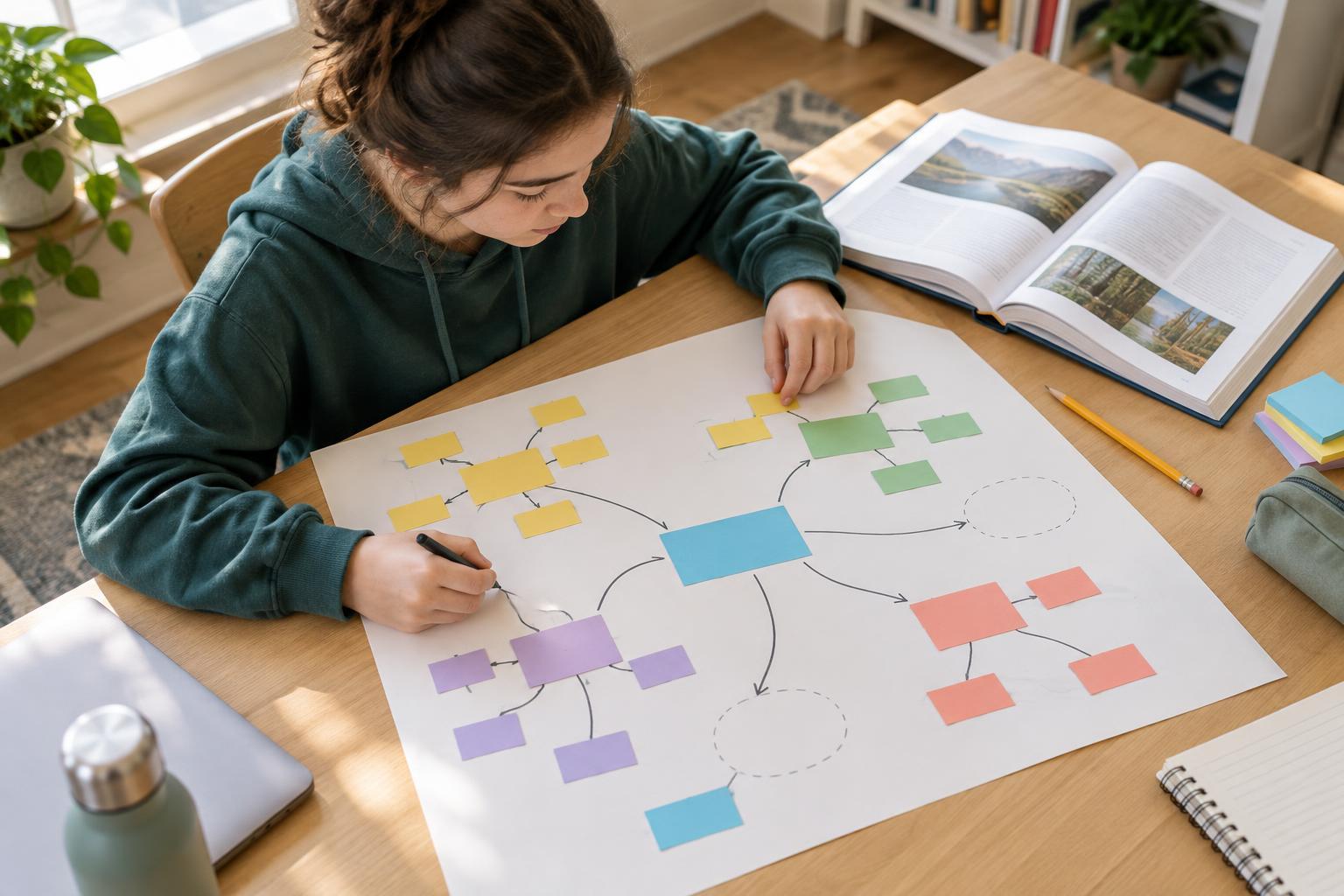
Good notes are a record of the ideas you want to return to, not a copy of every sentence. Under each heading, write a brief main point and a few supporting details. You could add a small example, a labeled sketch, or a question about something unclear. Keep definitions when they matter, but include a plain-language explanation alongside them.
Be selective with highlighting, too. If nearly every line is marked, the marks will not help you decide what to review. One option is to finish a paragraph first, then mark only the phrase you would need to find again. Your notes should make it easier to study without forcing you to reread the entire chapter.
When two ideas seem similar, put them side by side and describe the difference. For example, you might make a two-column comparison or write one sentence beginning, “Unlike the first process, the second…” This helps you move beyond recognizing terms toward using them accurately.
Check your understanding without looking
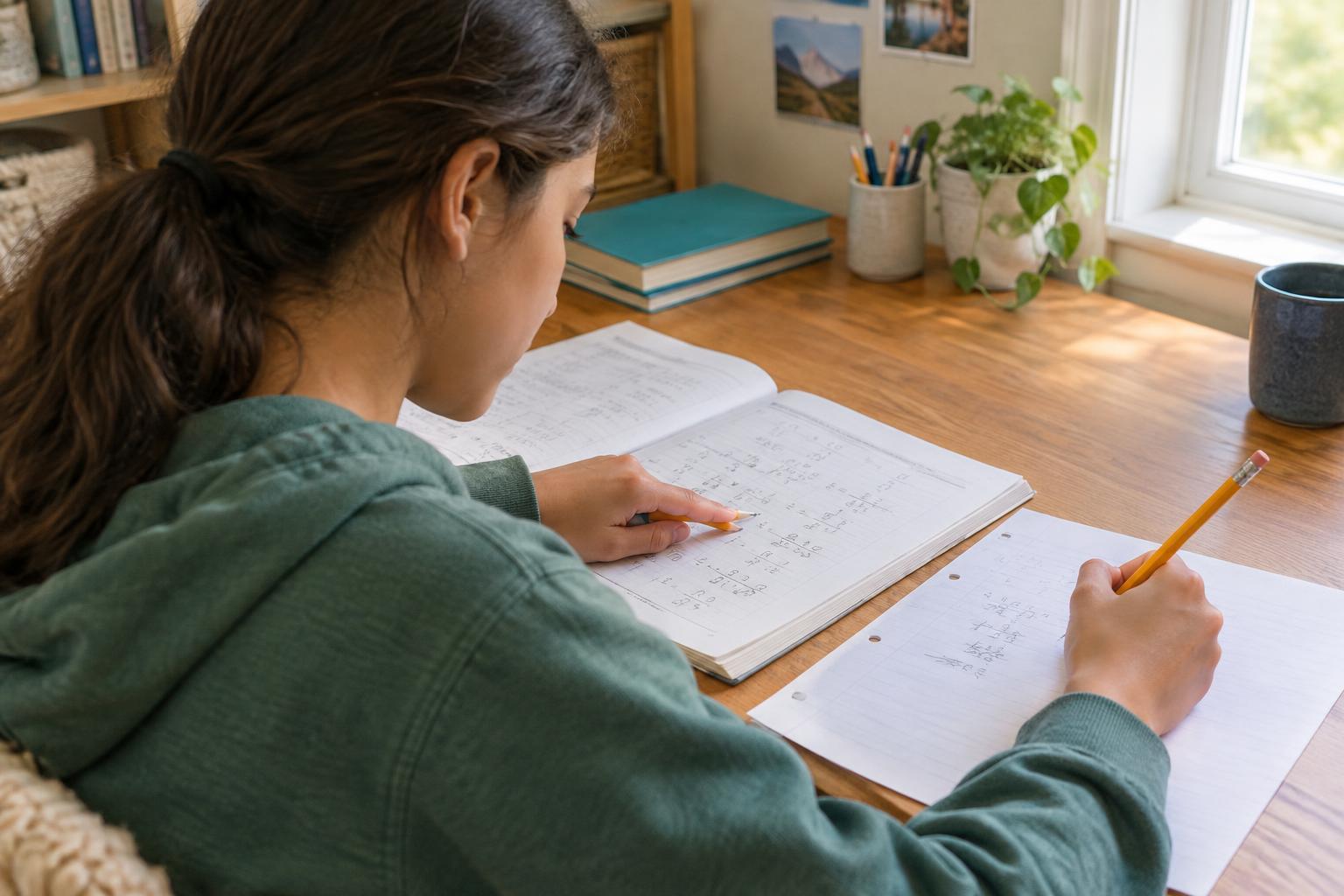
When you finish the chapter, close the book or cover your notes. Try to answer the questions you made during your preview. Then explain the chapter’s main idea aloud or in writing, as if you were helping a classmate who missed the reading. Name the important parts and describe how they connect. If the chapter teaches a method, try a new problem or example rather than only rereading a worked one.
Now check your explanation against the text. What did you remember correctly? What did you leave out, mix up, or struggle to explain? Questions at the end of the chapter can help, especially if you attempt them before checking the relevant pages. Getting something wrong during this check is useful: it shows you exactly what to revisit.
Also notice whether you could answer only a familiar example or explain the idea in a slightly different situation. You do not need a perfect answer on the first try. The goal is to find the gap while there is still time to work on it.
Choose one useful next step
After checking yourself, return to the sections that caused trouble. Try a different approach: draw the process, compare two terms, work through another example, or write a simpler explanation. If a sentence still does not make sense, note the page and your specific question so you can ask a teacher or classmate. “How does this step follow from the previous one?” is easier to answer than “I don’t get the chapter.”
Before you put the book away, write a short reminder for your next study session: the main idea, one point to review, and one question you still have. That small record gives you a starting place later. A chapter is not finished just because you reached its last page; it is more useful when you can explain what you read and know what to practice next.