Choose a meal and make a short plan
A bean-and-vegetable quesadilla is a useful first meal: it has only a few ingredients, and it does not require handling raw meat. You’ll need tortillas, canned beans, a vegetable such as bell pepper, and shredded cheese. Check that everyone eating can have the ingredients; if someone has an allergy, read package labels and ask a trusted adult about any ingredients you are unsure of. You can leave out the cheese or choose a suitable alternative if needed.
Before you start, read the whole plan: wash and cut the vegetable, drain the beans, fill the tortilla, heat it in a pan, then serve and clean up. Gather a cutting board, knife, can opener, strainer, skillet, spatula, plate, and dishcloth. Make sure you know how your stove works. If you are new to using it, ask an adult to stay nearby or handle that step with you.
Set up a clean, steady workspace
Wash your hands with soap and water before touching food. Clear a space on the counter, wipe it down, and use clean utensils. Rinse the bell pepper under running water, even if you plan to remove parts of it. Keep the cheese refrigerated until you need it, and return the package to the fridge after you have taken out enough.
Put the cutting board on a stable surface. If it slides, place a damp cloth underneath it. Cut the pepper slowly, keeping your fingertips curled away from the blade; ask for help if the knife or cutting method feels hard to control. Open the beans carefully because the lid may have a sharp edge. Drain and rinse them in a strainer, then set the ingredients where you can reach them without leaning over the stove.
Cook with attention, not speed
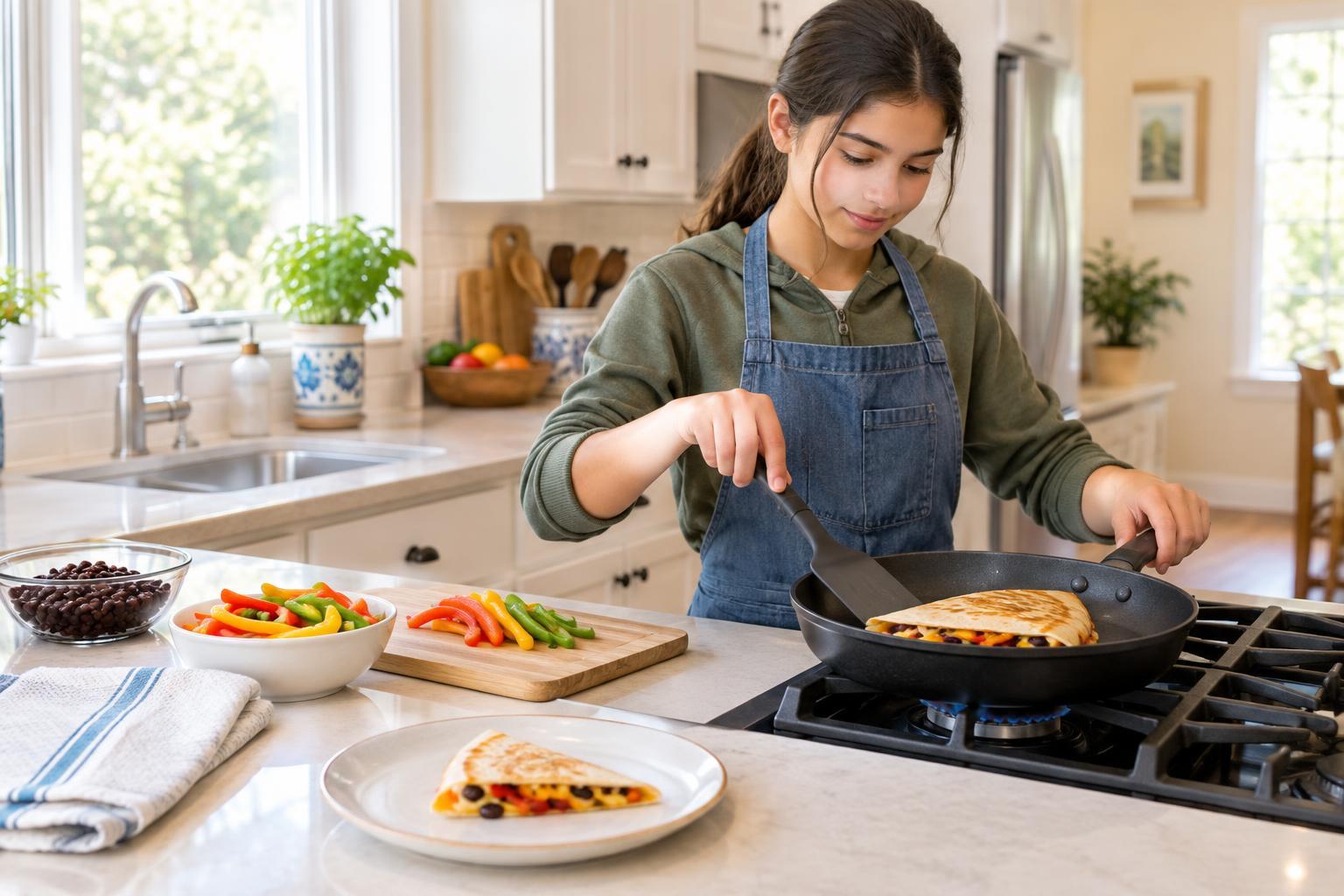
Place a tortilla in a skillet over medium heat. Add a small layer of beans, pepper, and cheese to one half, then fold the other half over. Avoid overfilling it: a quesadilla that stays together is easier to turn. Let it heat until the outside begins to turn golden and the cheese melts, then use a spatula to flip it. Watch the pan rather than relying only on a timer, since stoves and pans heat differently.
Keep loose sleeves, towels, and packaging away from the burner. Turn the pan handle inward so it is less likely to be bumped, but keep it away from other hot burners. Use the spatula instead of your fingers to move the food, and assume the pan and handle may be hot. If the tortilla starts to burn or something spills onto the stove, turn off the heat and ask for help rather than rushing to grab it. Never leave the stove on while you walk away.
Serve and store the meal
Turn off the stove as soon as the quesadilla is done. Move it to a plate with the spatula and give it a moment to cool before cutting or taking a bite. Hot cheese can stay hotter than the outside of the tortilla. Check the counter and stove area before eating so you do not leave an open can, a knife near an edge, or food that should be refrigerated sitting out.
If you have unused cheese or prepared filling, put it in clean, covered containers and refrigerate it promptly. Follow package storage directions, and ask an adult if you are uncertain whether food has been left out too long to keep. Do not taste food to decide whether it is safe. Leftovers are easiest to use when you label the container with what is inside and let others in the household know it is there.
Finish the job and learn from it
Once the pan has cooled, wash it along with the cutting board, knife, strainer, and utensils. Wipe the counter, throw away packaging, and wash your hands again. Be careful with the can lid when putting it in the trash. Cleaning up is part of making the meal: it leaves the kitchen ready for the next person and helps you notice whether everything has been put away.
Afterward, think about one thing you would change next time. Perhaps you would cut the pepper smaller, use less filling, or set out the spatula before turning on the stove. A simple meal does not have to be perfect to be a success. Following a plan, noticing hazards, and asking for help when you need it are skills you can carry into the next recipe.