Start with the test, not the clock
Before deciding how long to study, find out what the test will cover. Look at a review sheet, assignment list, class notes or any guidance your teacher has given. Write down the topics and the kinds of tasks you may need to do, such as explaining a concept, solving a problem or using vocabulary in context. If the scope is unclear, note what you need to ask your teacher rather than guessing.
Turn that information into a specific goal for this session. “Study science” is hard to act on; “practice labeling cell parts and explain what each does” gives you a starting point. You do not need to cover the entire test in one sitting. A useful goal is small enough to finish and clear enough that you can tell whether you finished it.
Choose what needs your attention most
Make a quick list of the topics you could study, then mark each one: comfortable, somewhat unsure or need to learn. Start with an important topic you are unsure about, rather than automatically beginning with the easiest page. If you have a practice quiz or returned assignment, use the questions you missed to help choose. Mistakes are clues about what to practice, not a verdict on your ability.
Keep your materials focused. Gather what you need for the goal you chose, such as notes, a textbook, a calculator or blank paper. Put unrelated tabs and supplies aside. If you are missing something, decide whether you can work on another topic now or need to ask for help later. That small decision can keep a missing worksheet from derailing the whole session.
Give the session a simple shape
Divide the time you have into three parts: a brief setup, a longer practice period and a short check at the end. For example, in a 45-minute session, you might spend five minutes choosing questions, 30 minutes practicing and ten minutes checking your answers. The exact minutes can change. Leave room for a break if your session is long or you notice your attention drifting.
Make the plan realistic for your energy and surroundings. A quiet place may help, but if you share space, you can still prepare by telling others when you hope to work or by keeping your materials together. Silence notifications if you can, and decide when you will check your phone instead of relying on willpower every time it lights up. If your available time is short, one focused topic is better than an ambitious list you cannot finish.
Practice remembering and using the material
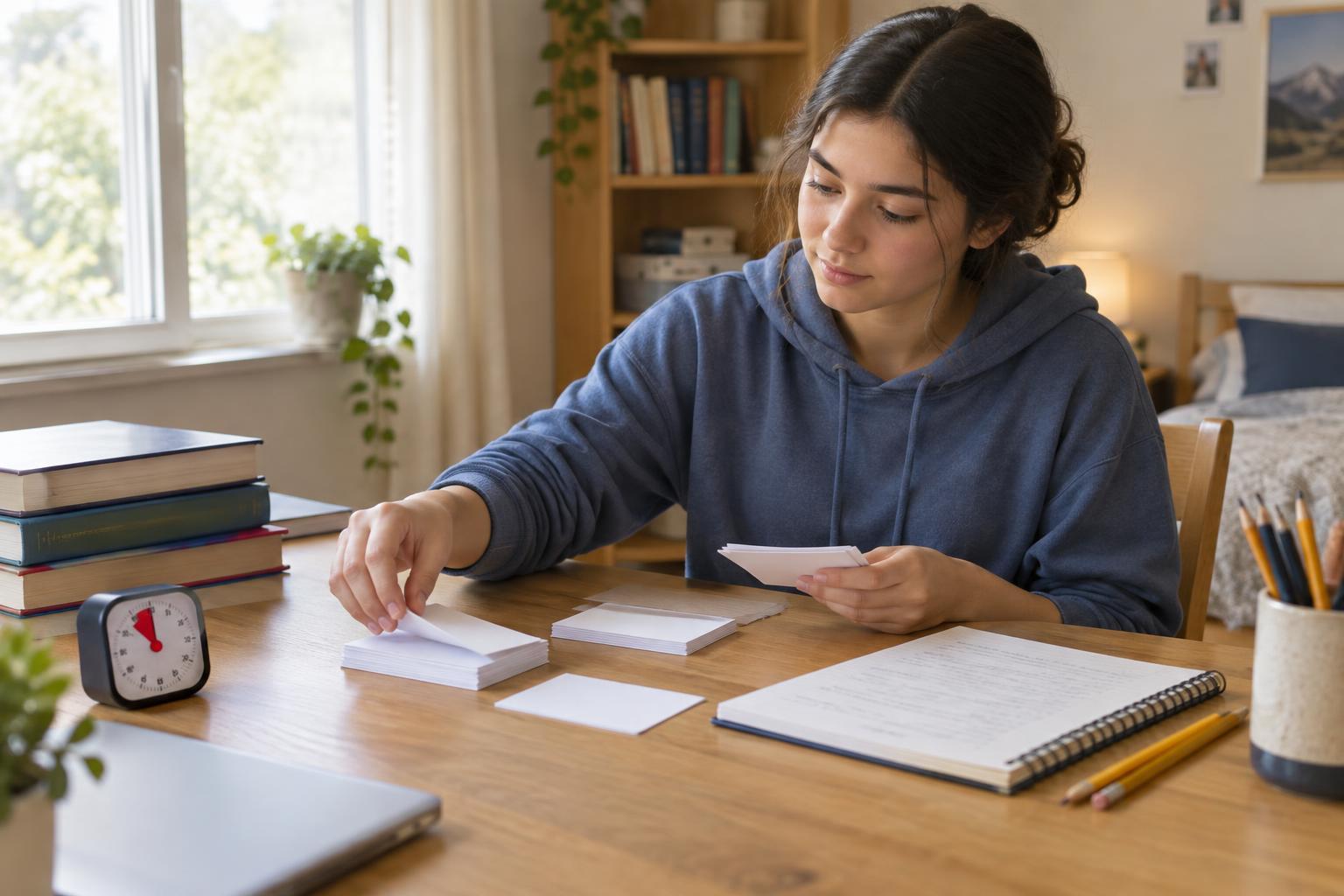
Reading notes can help you get oriented, but try spending most of the session doing something with the information. Close your notes and explain an idea in your own words. Solve a problem without looking at the worked example. Write possible test questions and answer them, or use flashcards that make you recall an answer before turning them over. These activities show you what you can do without a prompt in front of you.
When you get stuck, check the relevant explanation, then try again on a fresh question or a blank page. Avoid copying a correct answer and treating that as proof you understand it. For subjects with multi-step tasks, pay attention to where your process breaks down. You may know the first step but need practice choosing what comes next. Mark those spots so you can return to them or ask a specific question in class.
End with a check and a next step
Save the final few minutes for a quick self-check. Without looking, list the main points you studied or complete two or three representative questions. Compare your answers with your notes or an answer key if one is available. Sort anything you missed into two groups: things you can correct now and questions you need help with. This gives you a clearer picture than simply asking yourself whether you feel ready.
Before putting your materials away, write one sentence about what to do next: “Practice fraction word problems,” “Ask how to compare these two events” or “Review vocabulary tomorrow.” If the test is soon, use that note to guide your next available study period. Planning a session does not mean making every minute perfect. It means choosing a manageable task, working on it actively and leaving yourself a clear way forward.