Start with a simple storage routine
Putting groceries away is more than clearing the counter. Some foods need cold storage to slow the growth of harmful bacteria. Put items labeled “keep refrigerated,” along with raw meat, poultry, seafood, eggs, and other perishable foods, in the refrigerator promptly. Keep pantry foods in a clean, dry place and follow any storage directions on their packages.
A refrigerator should be at 40°F (4°C) or colder, and a freezer should be at 0°F (-18°C) or colder. A small appliance thermometer can help you check, since a dial setting does not always tell you the actual temperature. Leave enough space for cool air to circulate, and close the door fully after taking food out.
Give everything a sensible place
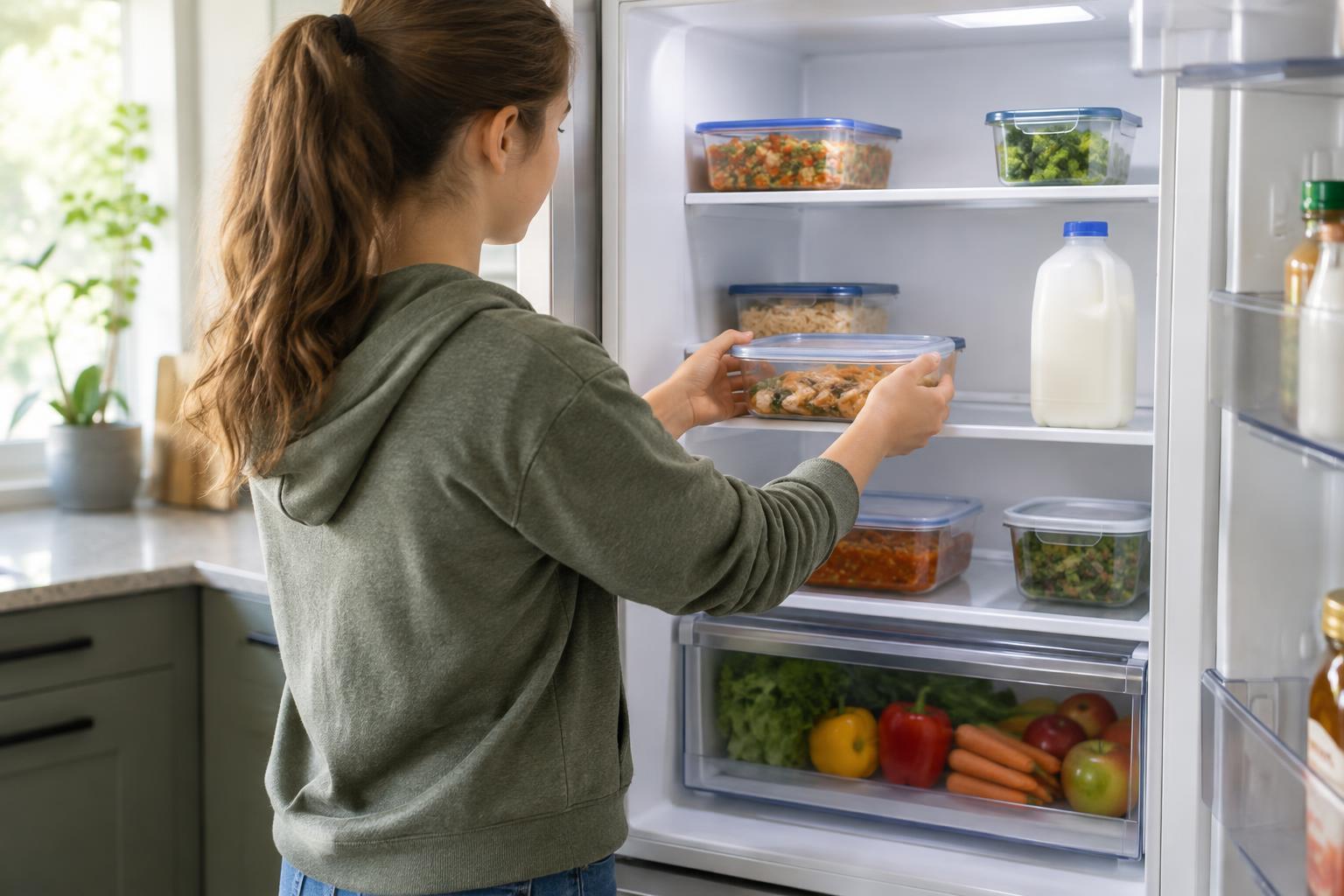
Store raw meat, poultry, and seafood in sealed containers or leakproof wrapping on the bottom shelf. That way, juices are less likely to drip onto food that is ready to eat. Keep leftovers covered in clean containers. Wash your hands and any surfaces or utensils that touch raw meat before using them for other foods.
Food storage can also be an organization habit. Label a container with what is inside and the day it went into the refrigerator. Put older food toward the front so it is easy to notice and use. If you share a kitchen, ask before eating a container that belongs to someone else—even if it looks like an abandoned leftover.
Handle leftovers while they are still fresh
After a meal, move perishable leftovers into the refrigerator within two hours. If food has been outside in temperatures above 90°F (32°C), shorten that window to one hour. You do not need to wait for a large pot to cool to room temperature: divide its contents among shallow containers so the food cools faster in the refrigerator.
A useful rule for cooked leftovers is to eat them within three to four days or freeze them for later. Write the date on freezer containers, and follow any specific storage instructions for the food you made. Reheat leftovers until they are thoroughly hot; a food thermometer is especially useful for checking that reheated dishes reach 165°F (74°C). Stir microwaved food and allow it to stand briefly so colder spots can heat through.
Know what spoilage can—and cannot—tell you
Mold, slime, an unusual color, a sour smell, or a swollen or leaking package are reasons to throw food away. Do not taste something to check whether it is safe. If a cooked dish or soft food has mold on it, discard the whole portion rather than scraping off the visible patch.
Food can also contain harmful bacteria without looking, smelling, or tasting different. That is why time and temperature matter as much as appearance. If a perishable food sat out too long, or you cannot remember how long leftovers have been in the refrigerator, throwing them away is the safer choice. A date printed on a package can help you plan what to use first, but it does not replace proper storage or a check for spoilage.
Make the habit easy to keep
Before cooking, take a moment to check what needs using. After eating, assign one person to pack leftovers while others clear the table. Once a week, look through the refrigerator for old containers, spills, or foods nearing the end of their storage time. These small routines are easier to remember than a complicated set of rules.
If you are unsure how a food should be stored, read its label or ask someone you trust who shares the kitchen. Learning to store food well is a practical form of independence: you can help protect the people eating with you, waste less of what your household buys, and make the next meal easier to prepare.