Start by noticing everyday habits
Reducing water and electricity use begins with paying attention. Think about the times you use a tap, switch on a light, charge a device or run an appliance. Which actions are necessary, and which continue after you have finished? You do not need to monitor everyone in the household. Start with routines you can control, such as turning off your bedroom light when you leave or closing the tap while you brush your teeth.
It can help to choose one habit at a time. Pick something easy to remember, try it for a week, then decide whether it fits your routine. Small, repeatable actions are often more useful than an ambitious plan that is hard to keep. The goal is to avoid waste, not to make anyone feel uncomfortable or guilty for using what they need.
Use water when you need it, then turn it off
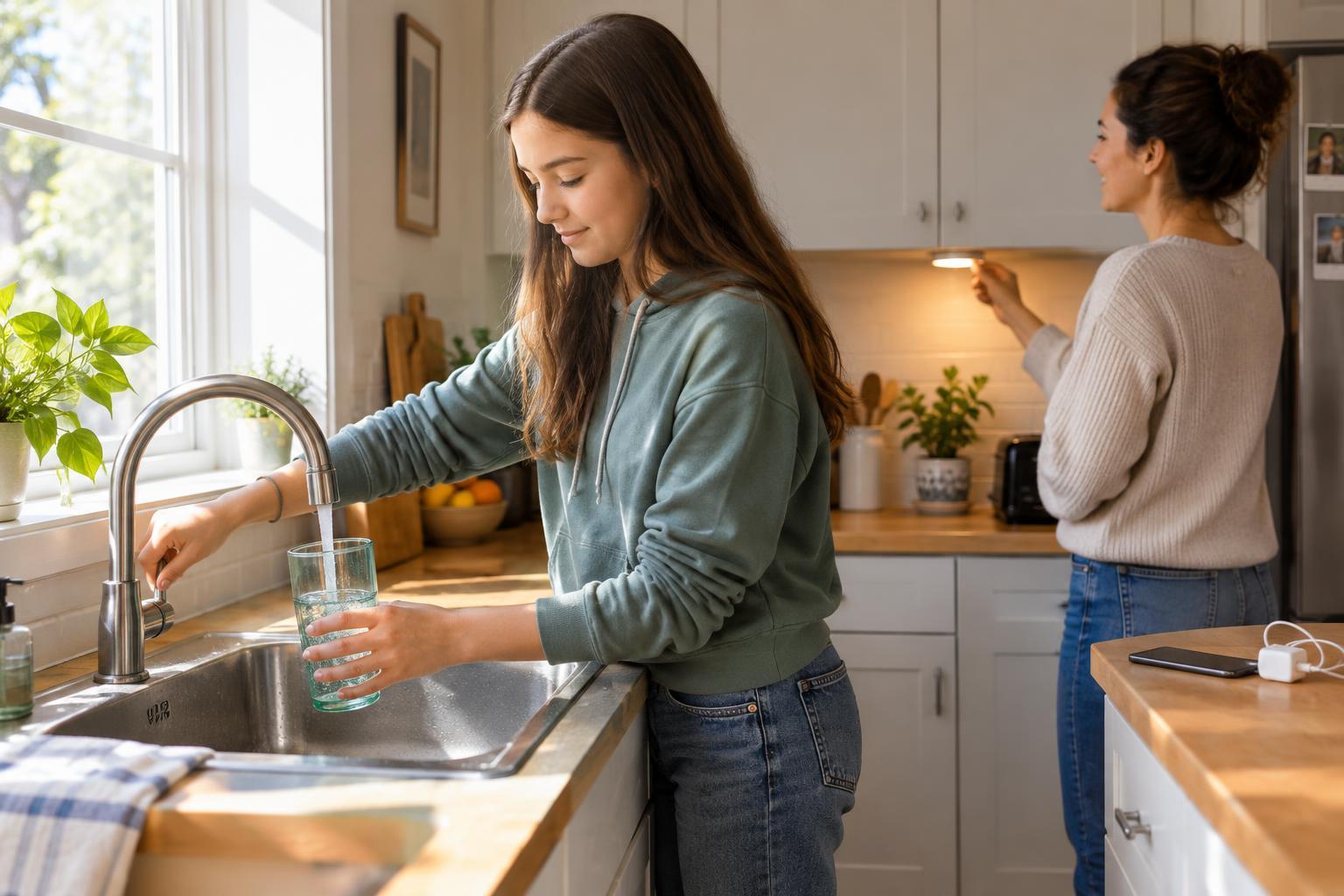
A running tap is easy to forget when you are busy. Turn it off while brushing your teeth, applying soap to your hands or scrubbing a dish, and turn it back on to rinse. If you are filling a glass or bottle, pay attention so it does not overflow. These habits take little planning and can become automatic with practice.
Showers offer another chance to be mindful. You might choose music or a simple routine to help you stay focused rather than letting the shower run while you decide what to do next. There is no need to rush so much that you skip washing properly. If you notice a dripping tap, a toilet that keeps running or a shower that will not turn off fully, tell an adult or the person responsible for repairs. Do not try to take apart plumbing without permission.
Make lighting and devices work for you
Before switching on a light, see whether daylight is enough for the task. When you finish using a room, turn off lights you no longer need. If other people are still there, check with them first. Shared spaces work best when saving electricity is a conversation, not a surprise.
Devices are another place to build simple habits. When you are done watching a screen or playing a game, put the device to sleep or turn it off instead of leaving it running. Unplug a charger from the socket when it is not in use, if you can reach it safely. Follow your household’s rules for outlets and power strips, and ask an adult for help if a plug feels hot, looks damaged or is difficult to remove. Never open an electrical device or handle a plug with wet hands.
Help household tasks run efficiently
Laundry and dishes use resources, but they are also necessary parts of keeping a home clean. If you help with laundry, ask how your household sorts clothes and decides when to run a load. Wearing a clean item again when it is still suitable, rather than putting everything straight into the wash, may reduce unnecessary laundry. For clothes that need washing, follow the care label and household routine.
In the kitchen, scrape food from plates as your household prefers and avoid leaving the tap running throughout cleanup. If your home has a dishwasher, ask how it should be loaded so dishes can get clean without needing another wash. If you help prepare food, take out what you need before opening the refrigerator and close its door promptly afterward. The best approach depends on the appliances and routines in your home, so learn how they are meant to be used before changing settings.
Turn individual habits into a shared plan
You do not have to manage the whole household to make a contribution. Try suggesting one easy change at a time: a reminder near a light switch, a place for reusable water bottles or a family check for dripping taps. Ask what others find realistic. Someone may need a light on for safety, extra water for cleaning or a device available for work. Respecting those needs is part of making a plan that lasts.
If you want to track progress, keep it simple. Make a short list of habits you are trying and check which ones you remembered. You can also notice whether a routine is becoming easier, without trying to calculate exact savings. Everyday independence includes understanding how a home works, taking care of your own tasks and cooperating with the people who share the space.