Start with what you want to make
You do not need to decide whether you are a “paper artist” or a “digital artist” before you begin. Both are ways to explore ideas, observe details and practice making marks. A pencil sketch in a notebook can become a finished drawing, while a digital sketch can remain a quick experiment. The better starting point is often the one that makes it easiest for you to draw regularly.
Think about what sounds enjoyable. Do you want to carry a sketchbook and draw things you notice? Paper may be convenient. Do you want to try different colors, move parts of a drawing or make images to share on a screen? Digital tools may appeal to you. Your choice can change as your interests grow.
How the tools feel and what they cost
Paper drawing can begin with a pencil and any suitable sheet of paper. The texture of the surface, the pressure of your hand and the marks left by an eraser are part of the experience. Supplies can be simple, though replacing paper, pens or paint adds up over time. If you are curious, start with what is already available rather than buying a large set of materials.
Digital drawing usually requires a phone, tablet or computer, plus an app. Some people draw with a finger or mouse; others prefer a stylus. A stylus can feel more natural for certain marks, but it is not a requirement for learning the basics. If you already have access to a device, try a simple drawing app before deciding whether you need anything else. Remember to save your work and take breaks when looking at a screen.
Mistakes, edits and useful limits
On paper, you can erase pencil marks, draw over lines or start a fresh page. Some marks cannot be removed completely, which can encourage you to work with an unexpected result. That does not make paper less forgiving; it simply makes some decisions more visible. Rough sketches and crossed-out attempts can show how an idea developed.
Digital tools often include undo, layers and ways to resize or move shapes. These features are helpful when you want to test several choices without redrawing everything. They can also tempt you to keep correcting one small area instead of finishing a drawing. If that happens, try setting a modest goal, such as making three quick versions of the same object before editing any one of them.
The drawing skills that carry over
Whichever tool you use, you can practice looking closely. Notice the large shapes of an object before adding tiny details. Compare where its edges sit, where light and dark areas appear, and how its parts relate to one another. These habits matter more to a beginner than knowing every brush setting or owning a particular kind of pencil.
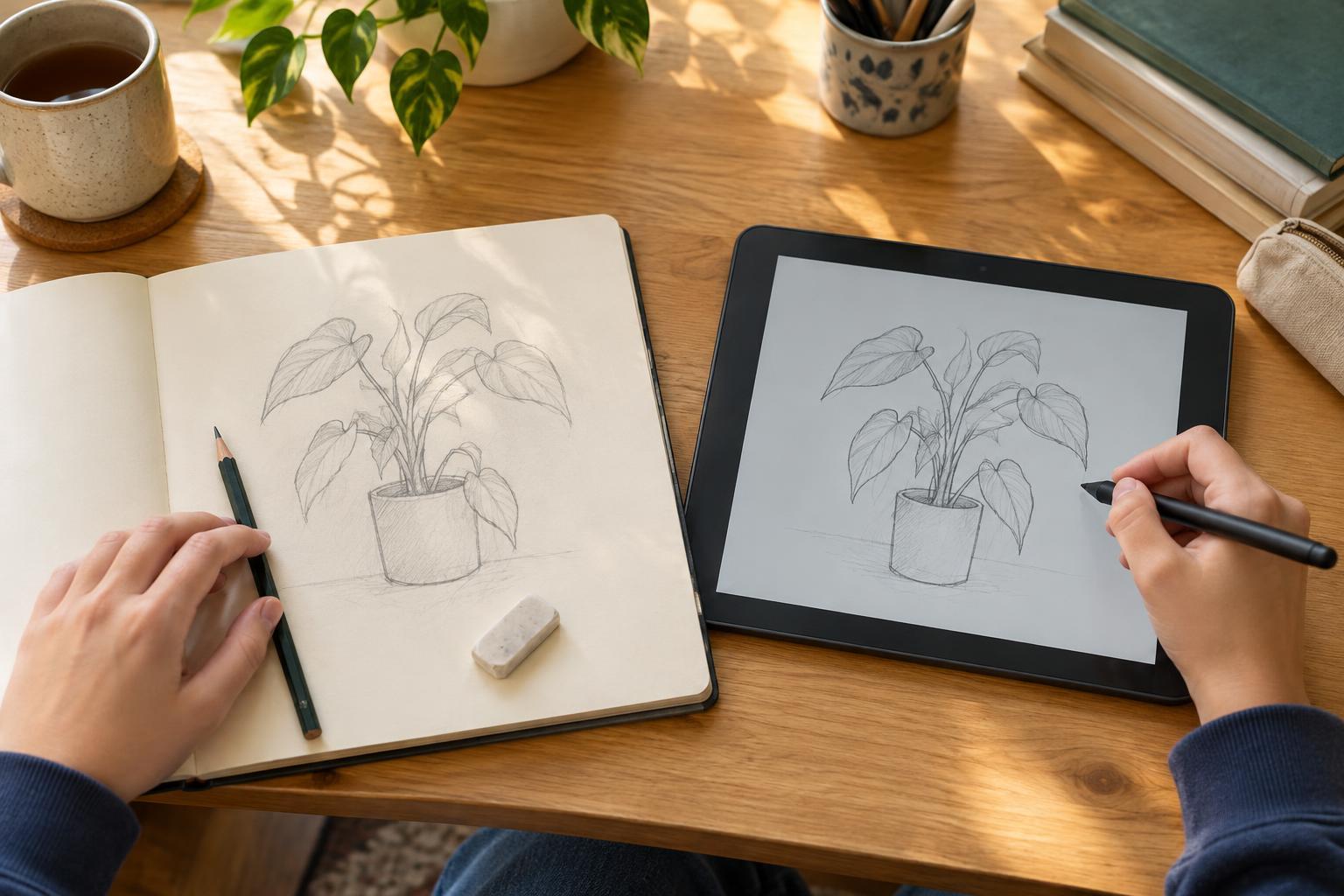
Try a short exercise with an everyday object, such as a shoe or a mug. Draw it once using only simple shapes, then draw it again while paying attention to its outline. If you can, try the exercise on both paper and a screen. The results may look different because the tools respond differently, but the observation practice is the same. Keep the drawings so you can notice what you learned, not just what you would change.
Choose a routine, not a permanent side
A useful beginner routine is small enough to repeat. You might draw for ten minutes when you have spare time, fill one sketchbook page a week or make a few digital studies of objects around your home. Pick subjects that interest you. Enjoyment makes it easier to return to drawing, especially when a picture does not turn out as planned.
You can also combine the two methods. Sketch on paper, photograph the sketch and add color digitally. Or draft an idea on a screen and redraw it with pens. If you share your work online, check what information is visible in the image or account first, and ask before posting a drawing of someone else. Paper and digital drawing are not competing tests of talent. They are two sets of tools you can use to express an idea.