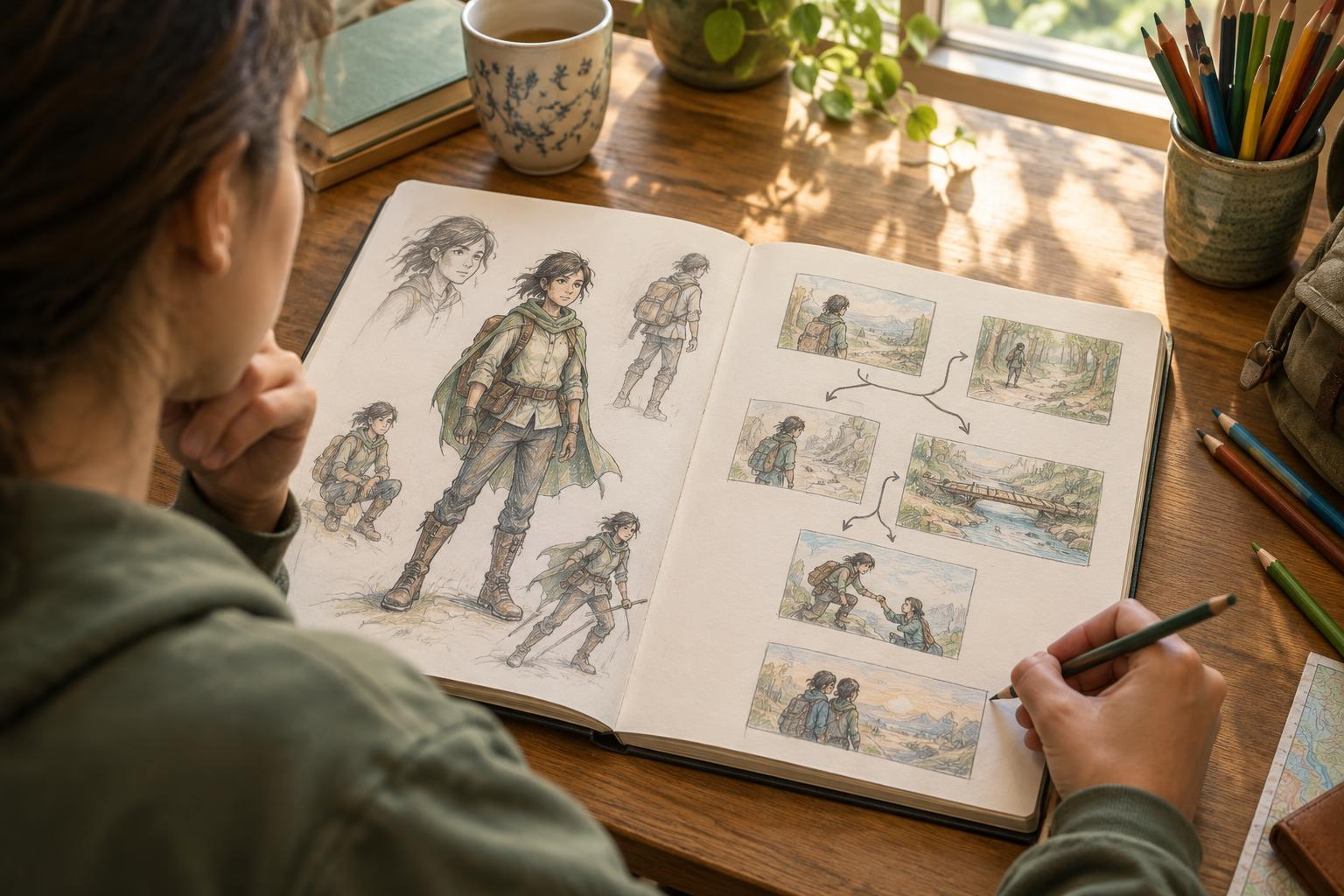
Start with a goal the reader can picture
A character profile can be fun to make, but knowing someone’s favorite food or hair color does not always tell you what they will do in a story. A goal gives the character a reason to act. It can be large, such as finding a missing friend, or small, such as getting through a school performance without freezing. Either way, the reader should be able to recognize what success might look like.
Try writing the goal as a sentence that begins, “My character wants to…” Then make it specific. “Wants to be accepted” is a useful starting point, but “wants to be invited to join the lunchtime art group” suggests possible scenes. The wider wish can still matter: perhaps joining the group represents a chance to feel less alone. That connection between a visible goal and a deeper hope gives you material to explore.
Give the goal a meaningful obstacle
If a character gets exactly what they want without difficulty, there may be little room for a story. An obstacle creates a question: what will this person do now? Obstacles need not be villains or disasters. They might be limited time, a misunderstanding, competing responsibilities, or the character’s own hesitation.
Suppose your character wants to enter a community mural project but promised to help a younger sibling after school. The problem is not simply that they are “too busy.” They must decide how to honor one commitment while making space for another. A believable obstacle connects to the character’s life and prevents an easy answer. It can also reveal what the character values before they are ready to say it aloud.
Use choices to reveal personality
Labels such as brave, shy, generous, or stubborn can help you plan, but choices let readers see those qualities for themselves. Two characters can want the same thing and respond differently when it becomes difficult. One might ask for help immediately; another might practice alone; a third might pretend they never cared. None of these responses has to define the character forever.
To make a choice interesting, give it a cost. If your character asks to change a family arrangement so they can attend the mural project, they may have to admit how much it matters to them. If they stay silent, they keep their promise but risk missing the opportunity. Ask yourself, “What does this character gain, and what might they give up?” The answer helps a decision feel like part of a person’s life rather than a device that moves the plot along.
Let decisions lead to consequences
After an important choice, show what happens because of it. A character who avoids a difficult conversation might find that someone else makes plans without them. A character who speaks up might receive support, but they might also have to negotiate. Consequences do not need to be punishments. They are simply the changes that follow an action.
This is also where relationships become more interesting. Other characters have their own goals and may interpret the same choice differently. A sibling might appreciate the character’s honesty but still need help getting home. A friend might offer to share project tasks. Giving other people reasonable needs keeps them from existing only to approve or block the main character. It also gives your character new information to consider before the next decision.
Show change through a new choice
A character does not have to become a completely different person by the end of a story. A small shift can be enough. Perhaps the student who tried to handle everything alone learns to ask a neighbor whether they can help with a ride. Perhaps they discover that the mural matters less to them than keeping a promise, and choose to join a later project. What matters is that an experience affects how they respond.
For a quick writing exercise, give a character one goal and place two decisions on the way to it. Write down what they choose first, what happens next, and what they choose when a similar problem appears again. Then draft a short scene for each decision. Instead of explaining that the character has grown, let the contrast between those scenes show it.