Start with a clear goal, not a perfect room
When a room feels overwhelming, the hardest part is often deciding what to do first. You do not need to organize every drawer or make the space look perfect in one session. A useful first goal is simpler: clear anything that does not belong, make the floor and main surfaces usable, and leave the room easier to move around in.
Before you begin, gather a trash bag, a laundry basket or pile, and a box or bag for items that belong elsewhere. If you share the room, focus on your own belongings and agree on shared spaces rather than moving someone else’s things without asking. You can work in short stretches and take breaks. The order matters more than your speed: each step should remove a kind of clutter so the next step is easier.
Remove trash and take out dishes
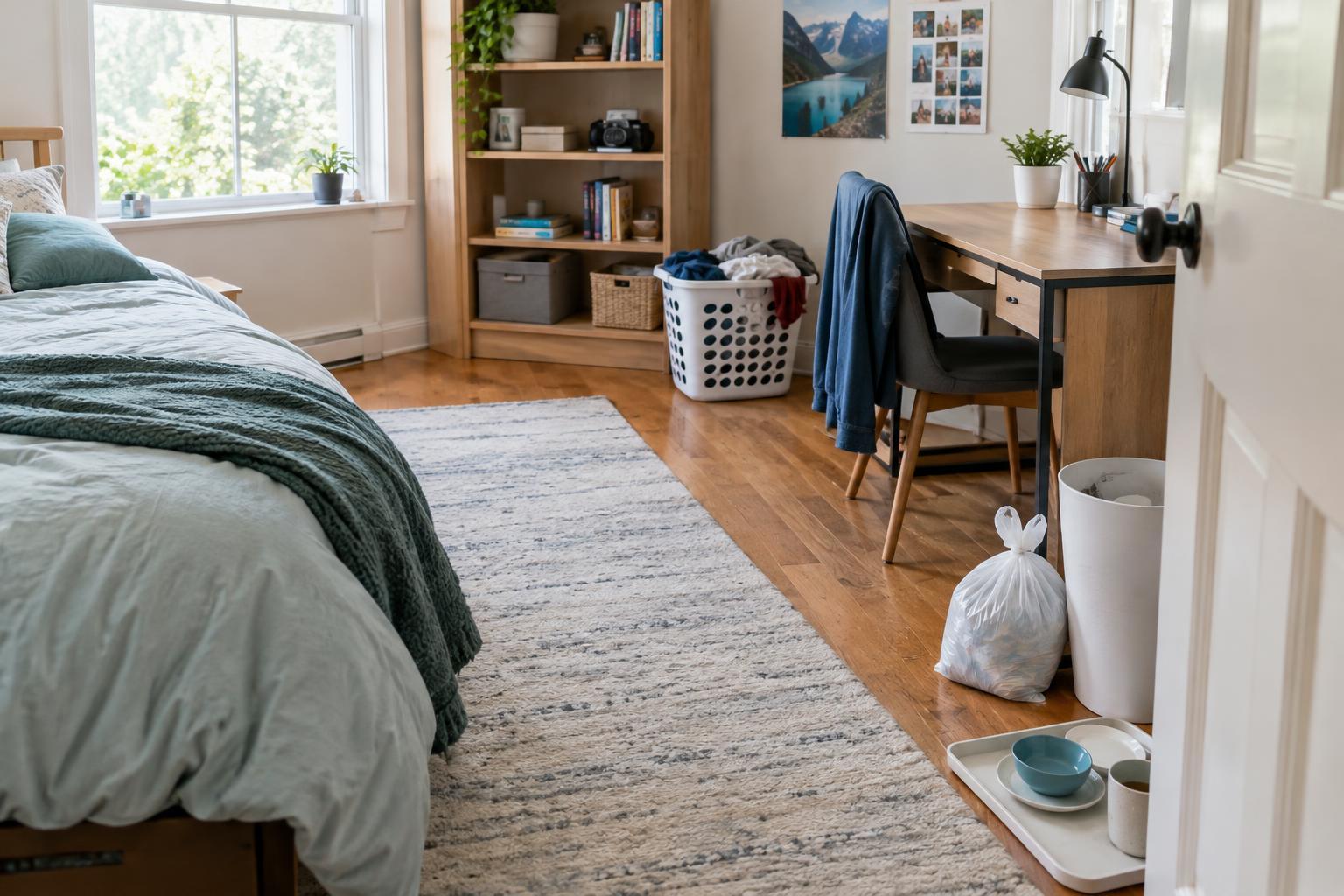
First, walk around the room and collect obvious trash: wrappers, empty packaging, used tissues and scraps of paper you no longer need. Check beside the bed, under the desk and near the door. If you are unsure whether a note or document is important, set it aside instead of throwing it away. Take the trash bag out when you are done so it does not become another thing sitting in the room.
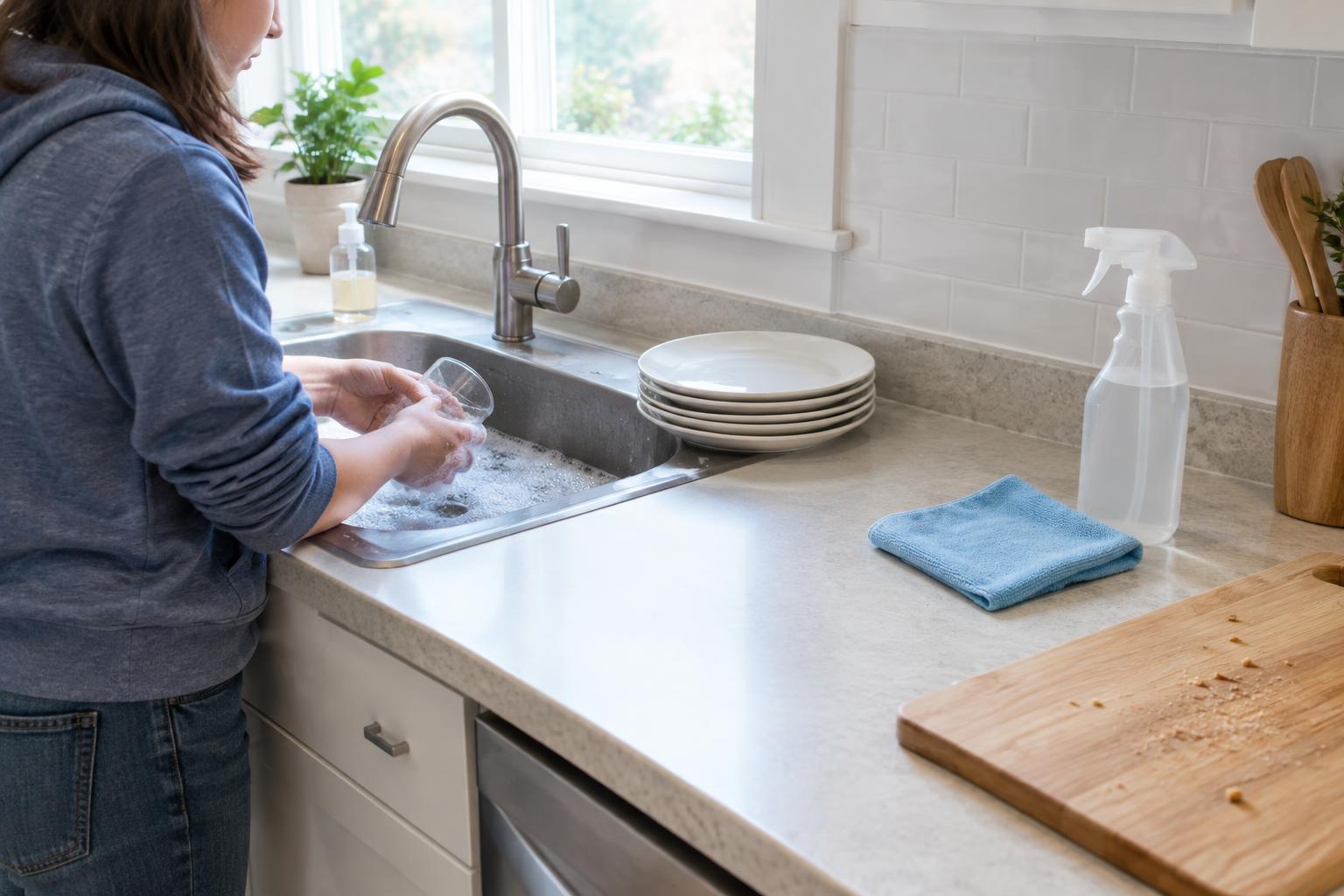
Next, gather cups, plates and utensils and bring them to the kitchen or the place your household uses for dishes. Do not get sidetracked into cleaning the entire kitchen; finish this one transfer and return. Removing food and dishes early frees up surfaces and helps you spot any spills that need attention. If you find a spill or something spoiled, deal with it promptly using your household’s cleaning supplies and instructions.
Sort laundry before putting other things away
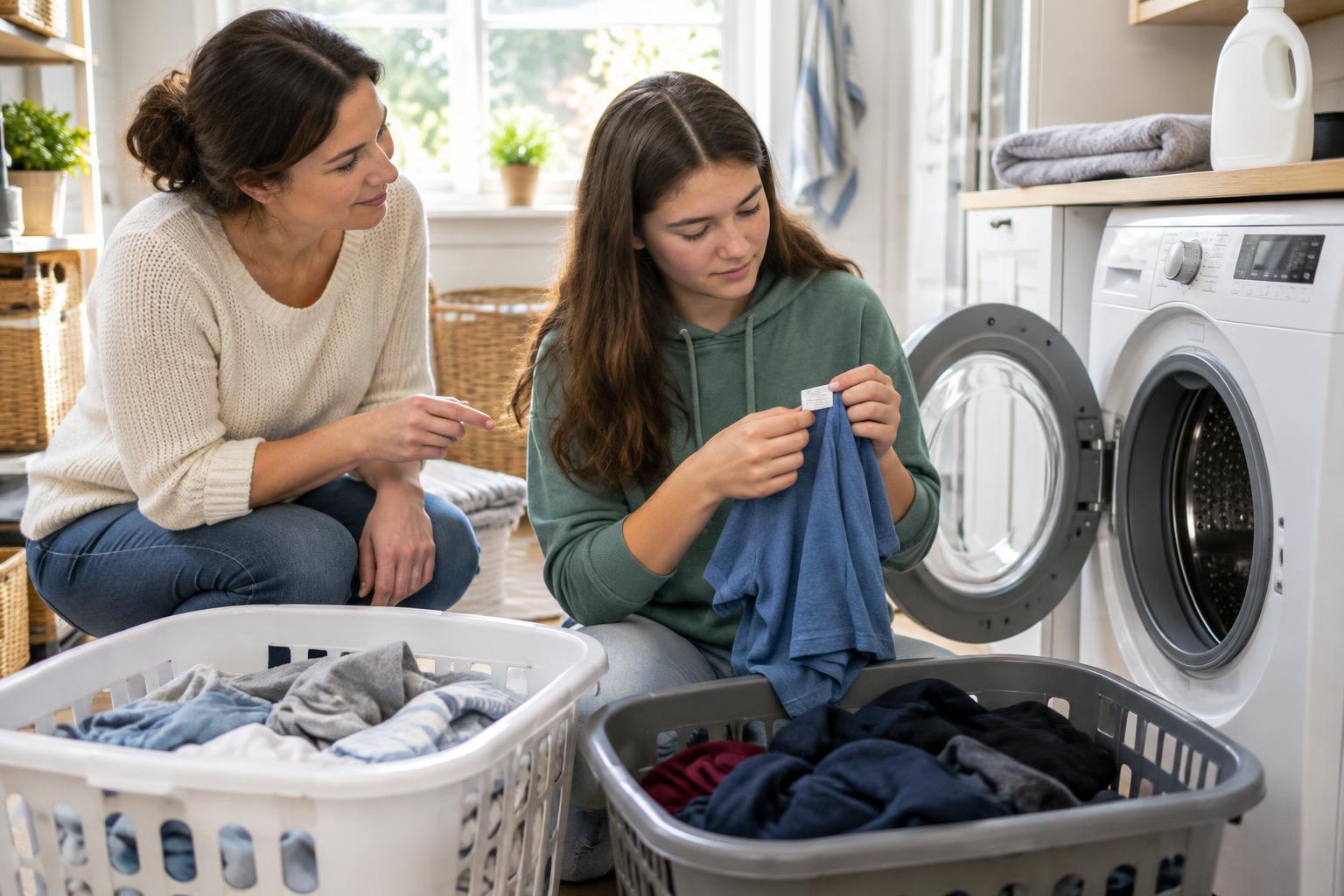
Now collect clothing, towels and bedding that need washing. Put them in a hamper or a designated pile. Hang up or fold clothes that are clean enough to wear again, following your household’s preferences. If it is difficult to tell what is clean, keeping a separate spot for “worn but not ready to wash” clothing can prevent it from mixing with freshly washed items.
You do not have to complete a load of laundry before continuing with the room. The point of this step is to get fabric off the floor and furniture. If washing is part of your task today, check care labels and ask about unfamiliar machine settings rather than guessing. Once clothes are sorted, you can see how much space you actually have to work with.
Give belongings a home, then clean surfaces
With the biggest clutter gone, pick up books, chargers, school supplies, hobby materials and other belongings. Start with items that already have a place. Put those away before deciding what to do with anything left over. Place things that belong in another room in your transfer box; make one trip with the box at the end instead of walking back and forth for every object.
For items without a home, choose a small, easy-to-reach location that makes sense for how you use them. A container for charging cables or one shelf for current schoolwork is often more useful than an elaborate system you will not maintain. Avoid hiding everything in a drawer just to make the room look clear. If a decision takes too long, set the item aside and keep moving.
Once desks, shelves and other surfaces are mostly clear, wipe them with a suitable cloth or household cleaner. Follow product directions, and do not mix cleaning products. Work from higher surfaces toward lower ones so dust and crumbs end up where you can collect them in the final step.
Finish with the floor and a small reset habit
Make the bed if you want to, then clear the remaining floor space. Sweep or vacuum where you can reach, including the spots where clutter was piled. Return anything you moved temporarily, take the transfer box to its proper destinations, and put away your supplies. A final look from the doorway can help you notice a dish, sock or school item you missed without restarting the whole process.
To make the next clean-up shorter, try a small reset at a time that fits your routine. Put dishes out, place dirty clothes in the hamper, throw away trash and return a few items to their homes. Some days you may only manage one of those jobs, and that still helps. A workable room is not one that never gets messy; it is one you know how to reset.