Pause and check the cut
A paper cut, a scrape from a rough surface, or a small nick while preparing food can happen during an ordinary day. First, stop what you are doing and move somewhere safe. Take a breath, wash your hands if you can, and look at the injury. Is it small and shallow, or does it look deep or wide? Is the bleeding light, or is blood flowing heavily? If you feel dizzy, sit down and call for help.
For a cut that is bleeding lightly, press a clean cloth or sterile gauze against it. Hold steady pressure rather than repeatedly lifting the cloth to check. If blood soaks through, add another clean layer on top. Ask an adult for help if you are unsure what you are seeing or what to do next. You do not have to manage an injury alone to show independence.
Clean and cover a minor cut
Once the bleeding has stopped, rinse a minor cut gently under clean running water to remove visible dirt. Wash the skin around it with mild soap, then pat the area dry with a clean cloth or gauze. Avoid scrubbing the cut or digging for anything stuck in it. If you can see debris that will not rinse away, ask an adult for help rather than trying to remove it yourself.
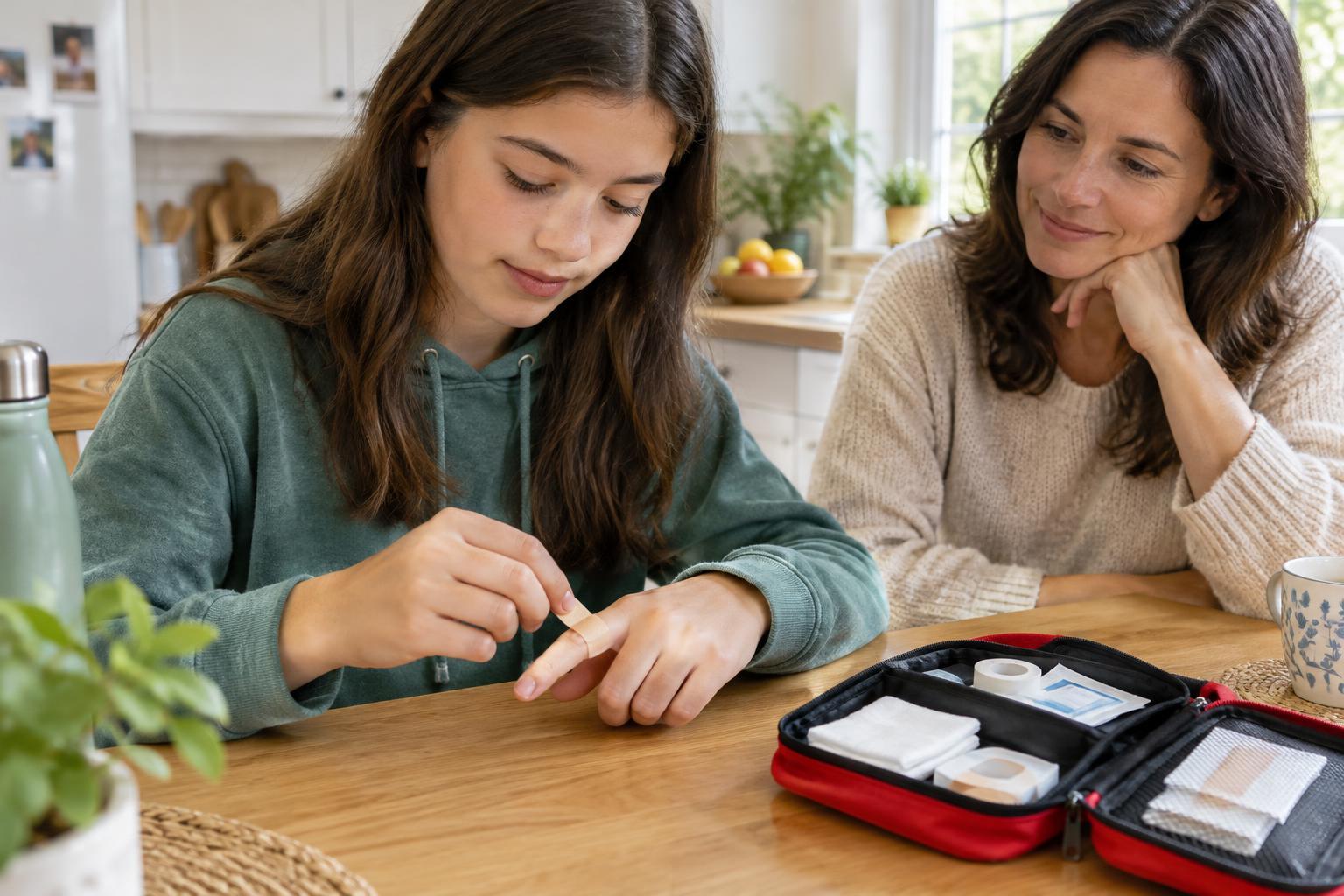
Cover the cut with a clean adhesive bandage or other appropriate dressing. A covering helps keep everyday dirt away, especially if the cut is on a hand or another area that rubs against clothing or objects. Change the covering if it becomes wet or dirty, and wash your hands before and after handling it. If a bandage irritates your skin or will not stay in place, tell an adult so you can find another way to protect the cut.
Know when to get an adult right away
Some injuries need more than routine care. Tell an adult promptly if a cut is deep, wide, gaping, very painful, or in a place that makes movement difficult. Get help if it was caused by a bite, a dirty or rusty object, or if something is embedded in the wound. Do not pull out an embedded object. An adult can help decide whether a healthcare professional should assess the injury, including whether vaccination records need checking.
Heavy bleeding, bleeding that does not slow with steady pressure, or signs that someone may faint call for urgent help. Alert an adult immediately and use your local emergency number if the situation seems serious. If you are at school or an activity, tell a teacher, coach, or another responsible adult. Knowing when to hand a problem over is part of handling it well.
Keep an eye on healing
Check the cut when you change its covering. A little tenderness can occur, but increasing redness, swelling, warmth, pain, or drainage may be a reason to tell an adult and ask about medical care. A fever or red streaks near a wound also deserve prompt attention. Do not try to diagnose the problem from a photo or wait because you feel embarrassed about how the cut happened.
If a cut keeps reopening, its edges do not stay together, or it is hard to keep clean during normal activities, ask for help. Different cuts heal at different rates, and an adult can help you decide what to do next. Your job is to notice changes and speak up, not to make every decision by yourself.
Prepare before you need supplies
It is easier to respond calmly when you know where basic supplies are kept. With an adult, find the first-aid kit at home and learn whom to contact when you are at school, traveling, or visiting someone else. A useful kit may include clean gauze, adhesive bandages in different sizes, and a way to wash your hands. Check that supplies are clean and that packaging is intact before using them.
You can also practice a simple reminder: stop, check, clean, cover, and tell someone when needed. If you are helping another person, ask before touching their injury and get an adult involved. Everyday responsibility does not mean taking risks or pretending you know more than you do. It means taking sensible first steps and asking for support when the situation is beyond a minor cut.