Choose a home for each item
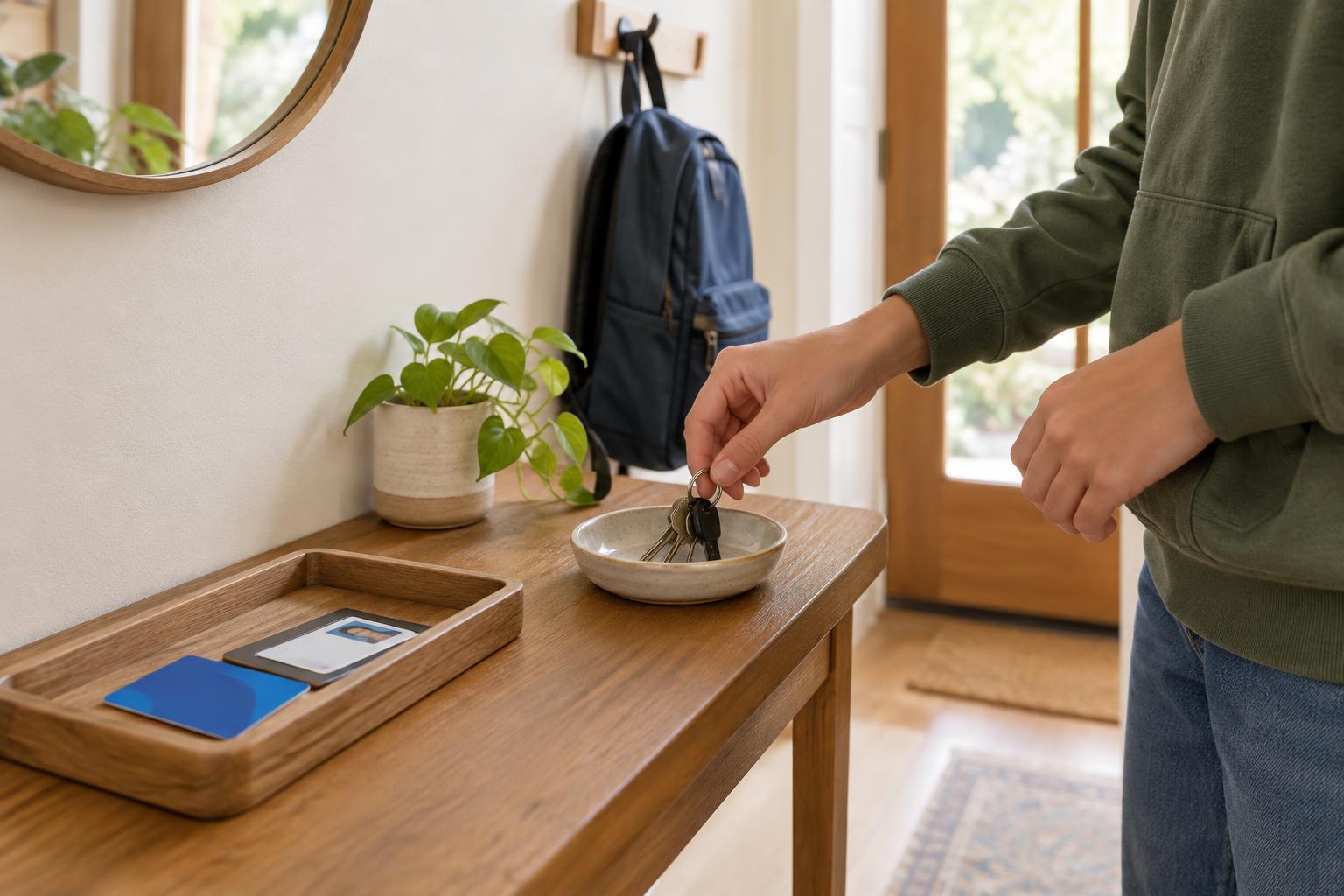
Keys, cards, and other small essentials are easy to misplace because they move with you. Start by choosing one place for each item when you are at home. A hook near the door might work for keys; a particular pocket in your bag might work for a transit card. The best spot is one you can reach easily and use every day.
Keep the system small. If you have to sort through several drawers or remember a complicated set of rules, you may stop using it. A tray, pouch, or clearly chosen bag pocket is often enough. If you share a home with others, ask before taking over a common surface, and keep your items separate from anything that belongs to someone else.
Give items that travel together a consistent arrangement. For example, you could keep your school ID in the same zipped pocket as your transit card, while keeping keys on a clip inside your bag. The goal is not to own more organizers. It is to make the correct place easy to recognize when you put something away.
Make leaving and returning a routine
Before you leave, pause for a short essentials check. Think about where you are going and name the things you need: perhaps keys, an ID, a transit card, and a charged phone. Touch or look at each item rather than assuming it is in your bag. A check that takes a few seconds at home can be easier than searching once you are on your way.
When you return, put each item in its chosen place before starting another activity. Dropping keys on a bed or leaving a card in a jacket pocket may feel convenient, but it creates another place to search later. If you need to switch bags or coats, move your essentials at the same time instead of waiting until the next morning.
Routines work better when they fit real life. If you often enter through a different door, a hook by one entrance may not help much. Try your system for several days and notice where it breaks down. You might decide that a secure pocket in your everyday bag is more reliable than a spot beside the door.
Treat shared and sensitive items with care
Some essentials affect other people, too. A shared house key or borrowed access card should go back where its owner expects it, according to your household’s agreement. If you are allowed to carry one, ask what to do if you cannot find it. Knowing the plan ahead of time makes it easier to speak up promptly.
Avoid attaching your home address or other personal details to a key ring in case it is lost. Be thoughtful about photos as well: an image that clearly shows a key, ID, or access code may reveal information you did not intend to share. If a card has account information on it, keep it in a secure place rather than leaving it out on a shared table.
Respect other people’s systems even when yours is different. If someone asks you to return an item to a specific place, do that rather than putting it where you think it belongs. Keeping track of essentials is partly a personal habit and partly a way to make shared spaces easier for everyone to use.
Have a calm plan for missing items
If something is missing, stop and retrace your steps before searching everywhere at once. Check its usual place, the bag or clothes you used most recently, and the last place you remember handling it. Look carefully rather than emptying several spaces at random. If you were somewhere outside the home, consider whether there is an appropriate lost-and-found contact.
Tell a trusted adult or the person responsible for a shared item promptly when a missing key or access card could affect security. Do not hide the problem while hoping the item will turn up. If a payment or transit card is missing, ask its owner or a trusted adult for help with the appropriate next step. Different cards and households have different procedures.
Once the immediate problem is handled, make one small adjustment to your routine. You might move your key clip to a pocket you use more often or add an essentials check before changing bags. Misplacing something does not mean you cannot be responsible. It gives you information about which part of your system needs to be simpler.